Links are not yet activated.
Is this your press release? Add a link to submitpr.org on your website and verify it — activation is instant and free.
Or upgrade once for permanent activation (from $19.95, pay with crypto).
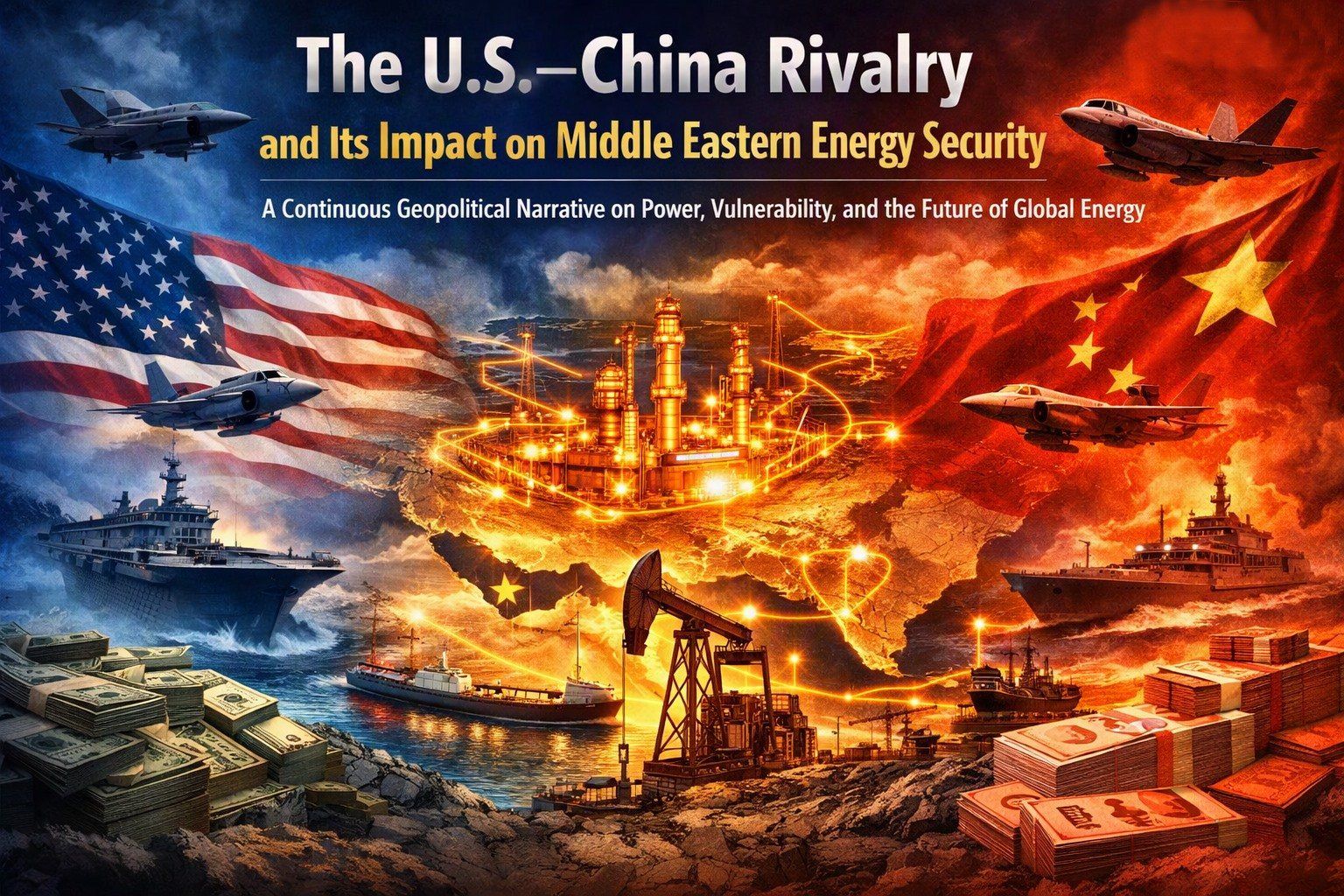
Iran – October 2026: Iranian international author, social activist, Middle Eastern Strategic Affairs & Global Geopolitics Amir Ghahraman Pour has published a new geopolitical analysis exploring how the intensifying U.S.–China rivalry is reshaping Middle Eastern energy security and redefining the region’s strategic role in global power competition.The study examines China’s deep dependence on Middle Eastern oil, Washington’s growing energy independence, and the resulting asymmetry that shapes both powers’ engagement with Gulf states. It highlights how Saudi Arabia, the UAE, Qatar, Iran, Israel, and Turkey are recalibrating their strategies amid shifting alliances, vulnerable maritime chokepoints, and expanding energy partnerships. The analysis underscores that the Middle East is no longer a passive arena but an active strategic broker in a global contest where energy flows, geopolitical leverage, and long‑term stability increasingly depend on how Washington and Beijing manage their rivalry.
The U.S.–China Rivalry and Its Impact on Middle Eastern Energy Security : A Continuous Geopolitical Narrative on Power, Vulnerability, and the Future of Global Energy
The rivalry between the United States and China has evolved into the defining strategic contest of the 21st century, and nowhere is its impact more visible — or more consequential — than in the Middle East. What once appeared to be a distant competition between two global giants has now become deeply intertwined with the region’s energy architecture, maritime chokepoints, political alignments, and long‑term economic trajectories. The Middle East, historically shaped by Western security guarantees and American military presence, is now navigating a world in which China’s economic gravity and Washington’s strategic recalibration collide directly over the question of energy security.China’s dependence on Middle Eastern oil is the structural foundation of this rivalry. Nearly half of China’s crude imports originate from the region, and the majority of these flows pass through vulnerable maritime corridors such as the Strait of Hormuz and the Strait of Malacca. This creates a paradox: China is rising as a global power, yet its economic stability remains tied to some of the world’s most politically volatile waterways. The United States, by contrast, has become increasingly energy‑independent, transforming from a major importer into a global exporter of oil and LNG. This asymmetry gives Washington a strategic buffer that Beijing lacks — and it shapes how both powers engage with Middle Eastern states.As China expands its economic footprint through long‑term oil contracts, infrastructure investments, and technology partnerships, the region’s traditional alignment with the United States begins to loosen. Gulf states such as Saudi Arabia, the UAE, and Qatar now pursue multi‑vector strategies: American security, Chinese markets, European investment, and selective cooperation with Russia. This diversification is not a rejection of the United States but a recognition that the emerging global order is no longer unipolar. Middle Eastern governments increasingly see China as an indispensable economic partner, even as they rely on American military protection to secure the very energy routes that feed China’s economy.Iran occupies a unique position in this landscape. Sanctions have pushed Tehran closer to Beijing, making China one of its most important oil customers. This relationship gives Iran economic breathing room and strengthens China’s leverage in regional diplomacy. Meanwhile, Israel and Turkey navigate the rivalry differently: Israel aligns technologically with the United States, while Turkey seeks to position itself as an energy hub connecting Asia, Europe, and the Middle East — benefiting from both sides without fully committing to either.The fragility of this system becomes clear during crises. Any disruption in the Strait of Hormuz — whether from conflict, sabotage, or geopolitical escalation — hits China far harder than the United States. Washington can increase domestic production, redirect exports, and stabilize markets. Beijing cannot. LNG disruptions in Qatar or pipeline instability in Iraq similarly expose China’s vulnerabilities. The United States, with its diversified energy base and global naval presence, retains the ability to shape outcomes in ways China cannot yet match.Yet China is not passive. It is building strategic petroleum reserves, investing in alternative suppliers, expanding renewable energy, and strengthening ties with Iran and Saudi Arabia simultaneously. It is also using diplomacy — most notably its mediation between Iran and Saudi Arabia — to reduce regional tensions that threaten its energy lifelines. In doing so, China is quietly constructing a geopolitical shield around its energy interests, even as the United States maintains the military architecture that keeps the region’s routes open.The future of Middle Eastern energy security will be defined by how these two powers manage their rivalry.
If competition intensifies, the region may become a battleground for influence, with states pressured to choose sides. If the rivalry stabilizes, the Middle East could leverage both powers to achieve unprecedented autonomy. But the structural reality remains : China needs Middle Eastern energy to sustain its rise, and the United States retains the tools to shape — and potentially disrupt — China’s access to it . In this emerging order, Middle Eastern states are no longer passive actors. They are strategic brokers, balancing two global powers whose competition increasingly revolves around the energy that flows beneath their soil and through their waters. The U.S.–China rivalry is not simply reshaping global geopolitics; it is redefining the Middle East’s role in the world — transforming the region from an arena of external intervention into a central stage where the future of global energy security will be decided.
“The U.S.–China rivalry is no longer a distant great‑power competition — it is now the invisible architecture shaping Middle Eastern energy security, determining which states gain leverage, which become vulnerable, and how the future of global power will be written,” said Amir Ghahraman Pour.
About Amir Ghahraman Pour : Amir Ghahraman Pour is an Iranian international author, social activist, and Middle Eastern Strategic Affairs & Global Geopolitics