Links are not yet activated.
Is this your press release? Add a link to submitpr.org on your website and verify it — activation is instant and free.
Or upgrade once for permanent activation (from $19.95, pay with crypto).
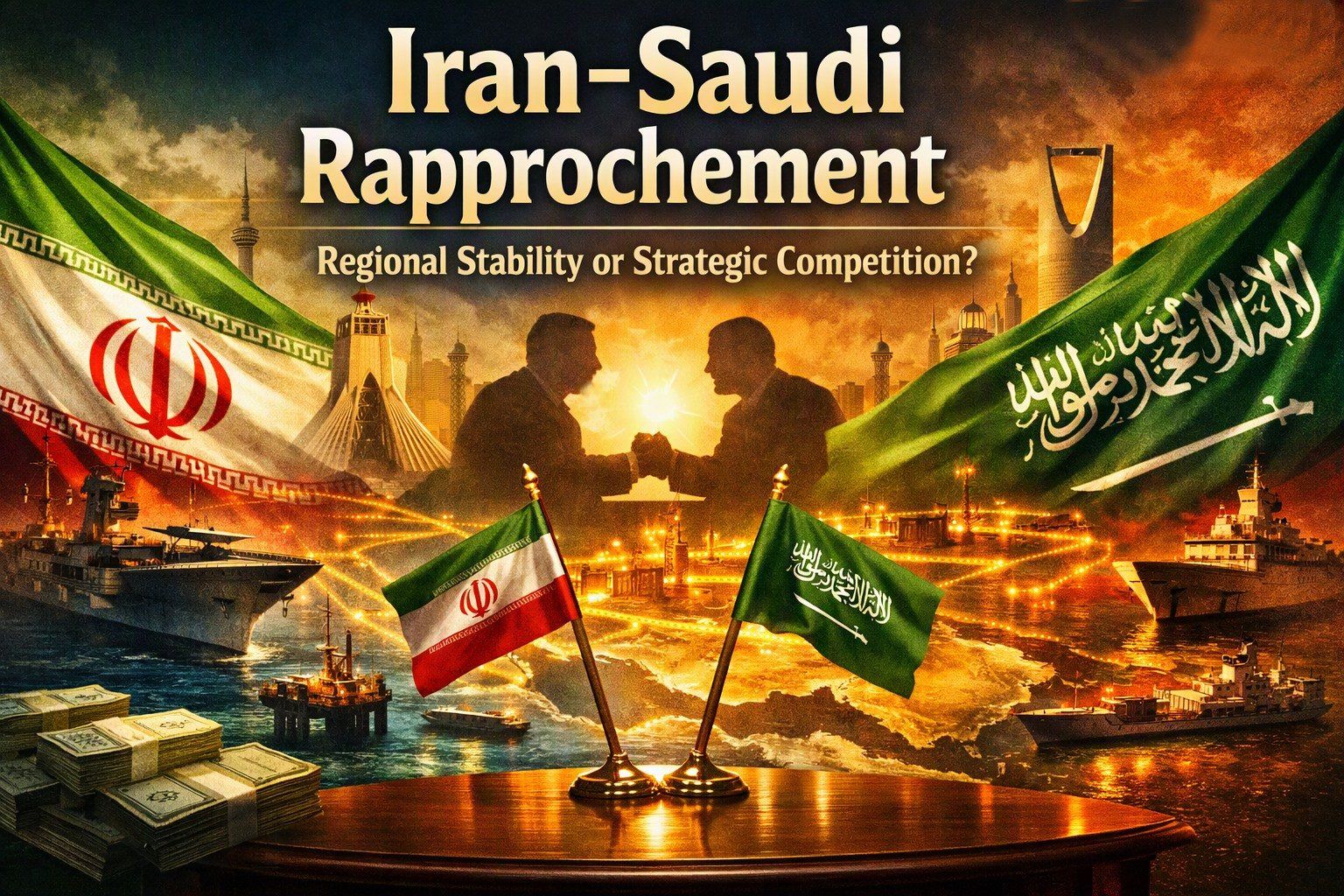
Iran – October 2026: Iranian international author, social activist, Middle Eastern Strategic Affairs & Global Geopolitics Amir Ghahraman Pour has published a new geopolitical analysis exploring how the Iran–Saudi rapprochement is reshaping regional stability, redefining strategic competition, and recalibrating power dynamics across the Middle East.Iran–Saudi Rapprochement : Regional Stability or Strategic Competition ?
Executive summary
For over four decades, the Iran–Saudi rivalry has been one of the central fault lines of Middle Eastern geopolitics—shaping conflicts from Yemen and Syria to Lebanon and Iraq. The Beijing‑brokered agreement in March 2023 to restore diplomatic relations marked a strategic turning point: two regional heavyweights, long locked in ideological, sectarian, and geopolitical confrontation, chose de‑escalation over open rivalry.
This analysis examines whether the current rapprochement is a genuine pathway toward regional stability or a tactical pause in a deeper strategic competition. It argues that while the détente creates real opportunities for conflict management, economic cooperation, and regional dialogue, it remains structurally fragile—constrained by divergent threat perceptions, competing regional visions, and the evolving multipolar global order.
1. Background & context: From rivalry to cautious engagement
A. Historical roots of the rivalry
Ideological divergence :
– Iran : post‑1979 revolutionary Islamic Republic, anti‑imperialist narrative, Shia political leadership.
– Saudi Arabia : conservative Sunni monarchy, guardian of the two holy mosques, status‑quo orientation.
Sectarian dimension :
– Rival claims to religious authority in the Muslim world.
– Instrumentalization of sectarian identities in regional conflicts.
Geopolitical competition :
– Competing for regional hegemony across the Gulf, Levant, and Red Sea.
– Influence over energy routes, maritime chokepoints, and security architectures.
B. Escalation and rupture (2016–2023)
– Severing of diplomatic ties in 2016 after the storming of the Saudi embassy in Tehran.
– Intensification of proxy competition in :
Yemen : Saudi‑led coalition vs. Iran‑aligned Houthis.
– Syria : divergent positions on Assad and opposition forces.
– Lebanon & Iraq : contest over political influence and armed non‑state actors.
The rivalry became strategically costly for both sides—militarily, economically, and reputationally.
C. Drivers of rapprochement
1) Strategic fatigue
Saudi Arabia :
Costly Yemen war, threats to energy infrastructure, need for regional stability to support Vision 2030.
-Iran :
Sanctions, economic pressure, overstretched proxy network, need to reduce external threats.
2) Changing regional environment
– Abraham Accords and shifting Arab–Israeli dynamics.
– Growing role of China as an economic and diplomatic actor.
– Perception of U.S. retrenchment and declining Western centrality.
3) Chinese mediation
Beijing’s role in brokering the 2023 agreement signaled :
– Emergence of a multipolar diplomatic order.
– Willingness of regional actors to seek non‑Western mediation.
2. Core strategic dynamics of the rapprochement
A. Strategic hedging, not full alignment
Both Tehran and Riyadh are not abandoning their core strategic visions; they are hedging:
– Reducing open confrontation.
– Keeping options open with multiple global powers (U.S., China, Russia).
– Testing the durability of mutual commitments.
B. Security and de‑escalation
Key areas of potential stabilisation :
Yemen :
Prospects for negotiated settlement and reduced cross‑border attacks.
Maritime security :
Cooperation or at least non‑interference in Persian Gulf and Red Sea waterways.
Energy infrastructure :
Lower risk of direct or proxy attacks on oil facilities.
Yet, none of these arenas are fully resolved; they remain contingent on sustained trust.
C. Economic and diplomatic incentives
Saudi Arabia needs :
– A predictable regional environment to attract FDI, tourism, and technology investment.
Iran needs :
Reduced isolation, regional trade, and diplomatic openings to mitigate sanctions.
Rapprochement offers mutual risk reduction, even if deep economic integration remains aspirational.
3. Regional implications : Stability or re‑designed competition ?
A. Persian Gulf security architecture
– The détente reduces immediate escalation risks.
– It may encourage :
– More inclusive regional dialogue formats.
– Less reliance on external security guarantees.
But it also introduces new competition over who shapes the future security order—Tehran, Riyadh or a broader Gulf framework.
B. Impact on proxy theatres
Yemen
– Potential shift from zero‑sum confrontation to managed coexistence.
– However, local actors and entrenched grievances can still derail peace efforts.
Lebanon & Iraq
– Reduced overt Saudi–Iranian confrontation may open space for political compromise.
– Yet, structural fragility of state institutions limits rapid stabilisation.
C. Israel and regional alignments
– Iran–Saudi rapprochement complicates Israeli strategic calculations.
– It may slow or reshape the trajectory of Saudi–Israeli normalisation.
– Regional blocs become more fluid, less binary.
4. Global implications : Multipolarity and external actors
A. China
– Gains diplomatic prestige as a credible mediator.
– Deepens economic and energy ties with both Iran and Saudi Arabia.
– Strengthens its role in shaping Gulf security indirectly.
B. United States
Faces a more complex environment :
– Reduced monopoly over regional diplomacy.
– Need to adapt to a landscape where partners pursue multi‑vector policies.
Washington’s leverage is still significant, but no longer exclusive.
C. Europe and Russia
Europe : limited but important role via diplomacy and economic ties.
Russia : uses the détente to maintain relevance in Syria and broader regional politics.
5. Scenario forecasting: Where can this détente go?
Scenario 1: Managed stability (cautious optimism)
– Rapprochement holds despite shocks.
– Yemen moves toward a political settlement.
– Maritime and energy security improve.
– Competition persists, but within controlled boundaries.
Scenario 2 : Strategic deepening (optimistic)
– Confidence‑building measures expand.
– Economic cooperation grows.
– Joint regional initiatives on energy, infrastructure, and security emerge.
– Rivalry transforms into structured, regulated competition.
Scenario 3 : Relapse into confrontation (pessimistic)
– A major regional shock (proxy escalation, external strike, domestic crisis) derails the détente.
– Trust collapses; embassies become symbolic rather than functional.
– Proxy theatres re‑ignite with greater intensity.
6. Conclusion : A fragile opportunity, not a finished project
The Iran–Saudi rapprochement is neither a cosmetic gesture nor a guaranteed path to lasting peace. It is a strategic necessity born out of fatigue, economic imperatives, and a changing global order—but it remains structurally fragile . If both sides treat the détente as a platform for managed competition and conflict regulation, the Middle East could enter a phase of relative stability, with lower systemic risk and more room for regional diplomacy. If, however, old threat perceptions and zero‑sum thinking prevail, the current window may close—leaving the region once again at the mercy of its deepest fault lines.
“In the Middle East, peace is never born from silence—it emerges when rivals find the courage to turn confrontation into dialogue, and competition into a disciplined search for stability.” Said Amir Ghahraman Pour
About Amir Ghahraman Pour : Amir Ghahraman Pour is an Iranian international author, social activist, and Middle Eastern Strategic Affairs & Global Geopolitics