Links are not yet activated.
Is this your press release? Add a link to submitpr.org on your website and verify it — activation is instant and free.
Or upgrade with KIN for permanent activation (from $19.95).
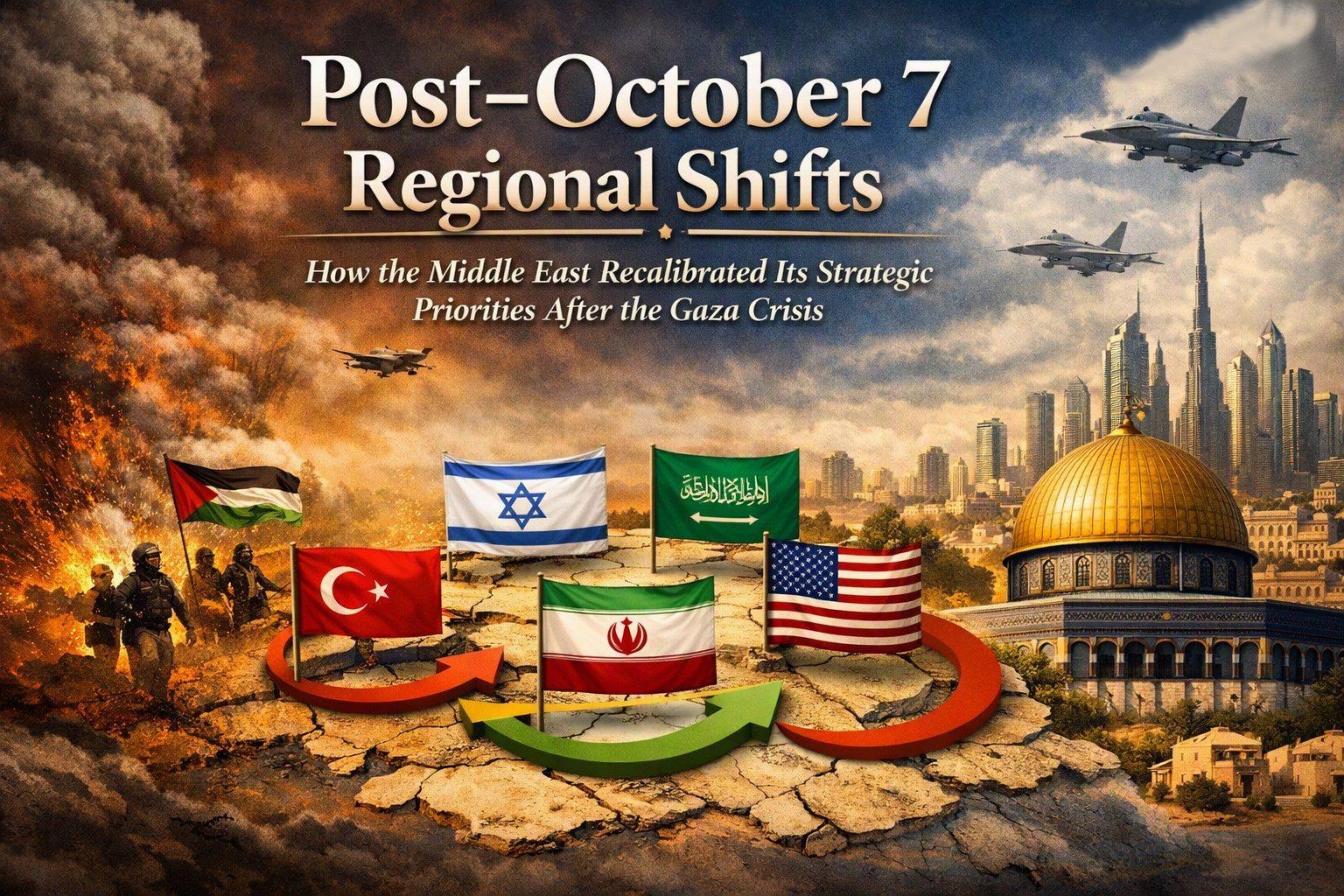
Iran – October 2026: Iranian international author, social activist, Middle Eastern Strategic Affairs & Global Geopolitics Amir Ghahraman Pour has released a comprehensive geopolitical analysis on how the October 7 Gaza crisis triggered one of the most consequential regional recalibrations in the Middle East.The study highlights Israel’s strategic reassessment, Iran’s calibrated response, the Gulf states’ multi‑vector diplomacy, and the expanding role of non‑state actors. It also examines U.S. policy perceptions, Turkey’s growing influence, and the involvement of global powers such as China and Russia. The analysis underscores how the crisis accelerated regional autonomy, reshaped alliances, and transformed security priorities into complex multi‑domain frameworks — marking a historic shift in the balance of power across the Middle East.How the Middle East Recalibrated Its Strategic Priorities After the Gaza Crisis ?
Introduction
The events of October 7 triggered one of the most consequential geopolitical recalibrations in the Middle East in decades.
Beyond the immediate military and humanitarian dimensions, the crisis reshaped regional alliances, security doctrines, diplomatic behavior, and the strategic calculations of both state and non‑state actors.
Understanding these shifts is essential for anticipating the region’s evolving balance of power.
Israel’s Strategic Reassessment
Israel entered a period of deep strategic introspection :
– Expanded intelligence coordination with Western allies
– Heightened focus on multi‑front threats
– Reevaluation of deterrence posture toward Gaza, Lebanon, and Syria
– Increased reliance on U.S. political and military support
Israel’s security doctrine shifted from short-term containment to long-term operational pressure.
Iran’s Calibrated Response
Iran adopted a strategy of assertive caution :
– Supporting aligned non‑state actors without crossing thresholds that trigger direct confrontation
– Strengthening regional deterrence through Hezbollah, Ansarullah, and Iraqi groups
– Leveraging the crisis to expand diplomatic influence
– Maintaining strategic ambiguity to avoid escalation with Israel and the U.S.
Iran’s approach reflects a desire to preserve influence while avoiding a direct regional war.
The Gulf States : Strategic Neutrality and Diplomatic Balancing
Gulf states responded with a mix of caution and strategic autonomy :
– Saudi Arabia paused normalization talks with Israel but maintained diplomatic flexibility
– UAE balanced economic ties with Israel and regional stability concerns
– Qatar emerged as a central mediator in hostage negotiations
– Oman maintained its traditional role as a neutral diplomatic bridge
The crisis accelerated the Gulf’s shift toward multi-vector diplomacy.
Non‑State Actors and the Expanding Proxy Geometry
The post–October 7 environment intensified the role of non‑state actors :
– Hezbollah increased pressure on Israel’s northern front
– Ansarullah targeted maritime routes in the Red SeaIraqi groups expanded operations against U.S. positions
– Hamas faced internal fragmentation and external recalibration
These actors collectively reshaped the region’s distributed deterrence architecture.
U.S. Policy and Regional Perceptions
Washington’s response produced several regional outcomes :
– Reinforced military presence to deter escalation
– Strengthened support for Israel
– Increased diplomatic engagement with Gulf states
– Managed tensions with Iran through indirect channels
However, regional states perceived a U.S. overstretch, encouraging greater autonomy.
Turkey’s Expanding Regional Role
Turkey leveraged the crisis to :
– Increase diplomatic influence
– Position itself as a mediator
– Expand security coordination with regional actors
– Balance relations with Israel, Iran, and Arab states
Turkey’s multi-layered strategy enhanced its regional relevance.
Global Powers : China and Russia
China
– Maintained neutrality
– Expanded diplomatic engagement
– Strengthened energy partnerships
– Positioned itself as a stabilizing actor
Russia
– Leveraged the crisis to distract Western focus
– Maintained coordination with Iran and Syria
– Balanced relations with Israel
– Used the conflict to reinforce its Middle Eastern presence
Both powers benefited from U.S. strategic distraction.
Regional Security Recalibration
Post–October 7, regional security priorities shifted toward :
– Multi-front conflict management
– Maritime security
– Cyber defense
– Energy infrastructure protection
– Crisis diplomacy
The region moved from traditional military-centric models to complex, multi-domain security frameworks.
Conclusion
The October 7 crisis reshaped Middle Eastern geopolitics by accelerating regional autonomy, redefining alliances, and expanding the role of non‑state actors.
States now operate within a more fragmented, unpredictable, and interconnected strategic environment.
Understanding these shifts is essential for anticipating future escalations and the evolving balance of power.
“The October 7 crisis did not simply ignite another round of conflict — it redefined the strategic DNA of the Middle East, forcing states and non‑state actors alike to recalibrate alliances, deterrence doctrines, and diplomatic behavior in ways that will shape the region’s balance of power for years to come,” said Amir Ghahraman Pour
About Amir Ghahraman Pour : Amir Ghahraman Pour is an Iranian international author, social activist, and Middle Eastern Strategic Affairs & Global Geopolitics