Links are not yet activated.
Is this your press release? Add a link to submitpr.org on your website and verify it — activation is instant and free.
Or upgrade with KIN for permanent activation (from $19.95).
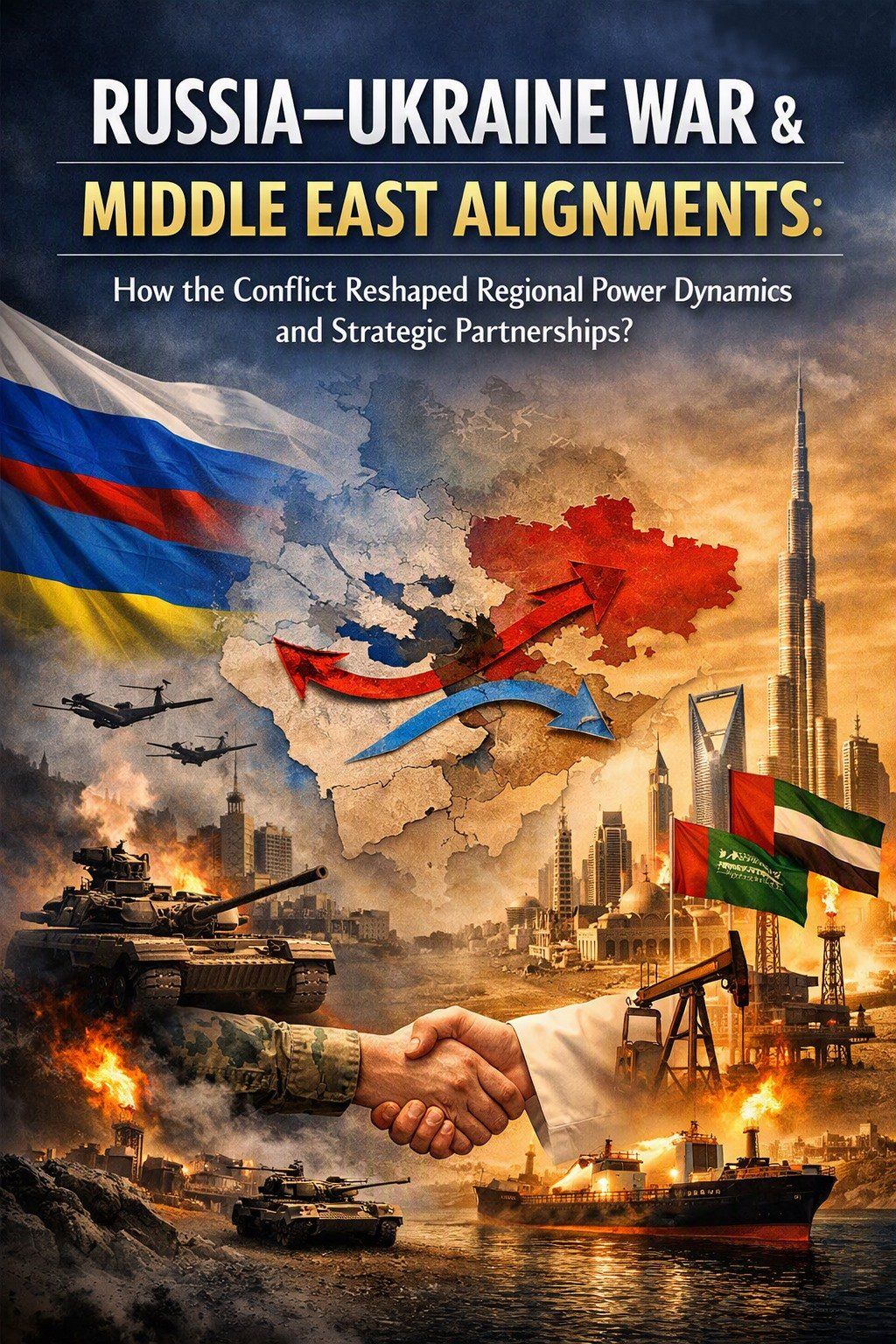
Iran – October 2026: Iranian International author, social activist, and political commentator Amir Ghahraman Pour has released a new geopolitical analysis examining how the Russia–Ukraine war reshaped strategic alignments across the Middle East, highlighting Russia’s endurance, U.S. policy shifts, Iran’s expanding role, and China’s silent advantage.Introduction
The Russia–Ukraine war has triggered one of the most significant geopolitical shifts of the decade. While the conflict is centered in Eastern Europe, its ripple effects have profoundly reshaped political, economic, and security alignments across the Middle East.
Regional states are recalibrating their strategic priorities, reassessing partnerships, and navigating a rapidly changing global order in which Russia, the United States, China, and Europe compete for influence.
Russia’s Strategic Repositioning in the Middle East
Despite being heavily engaged in Ukraine, Russia has maintained — and in some areas expanded — its Middle Eastern presence :
– Syria remains Moscow’s anchor, providing military access and regional leverage.
– Defense cooperation with Iran has deepened, especially in drones and missile technologies.
– Energy coordination with Gulf states through OPEC+ has strengthened Russia’s economic resilience.
– Diplomatic outreach to Egypt, Algeria, and the UAE continues despite Western pressure.
Russia’s Middle East strategy has shifted from active expansion to strategic endurance, ensuring that its regional influence remains intact despite the war.
U.S. Policy Adjustments and Regional Reactions
The war has forced Washington to prioritize Europe, reducing its bandwidth for Middle Eastern crises. This has produced several regional outcomes:
Gulf states adopting more autonomous foreign policies
– Israel balancing between U.S. expectations and cautious neutrality toward Russia
– Turkey leveraging its NATO position while expanding regional influence
– Arab states diversifying partnerships with China and Russia
The perception of a partial U.S. retrenchment has encouraged Middle Eastern governments to pursue multi-vector diplomacy.
Iran’s Expanding Strategic Role
Iran has emerged as one of the most consequential actors in the Russia–Ukraine conflict :
– Drone and missile cooperation with Russia has elevated Tehran’s military relevance.
– Sanctions alignment between Russia and Iran has created new economic corridors.
– Shared opposition to Western pressure has strengthened political ties.
– Regional influence through non-state actors remains a key pillar of Iran’s strategy.
The war has effectively integrated Iran deeper into Eurasian geopolitical networks.
China’s Silent Advantage
While not directly involved in the conflict, China has benefited strategically :
– Energy imports from the Middle East at discounted rates
– Strengthened diplomatic role, including brokering Saudi–Iran normalization
– Expansion of Belt and Road infrastructure
– Growing influence in Gulf economic diversification programs
China’s neutral stance has allowed it to become a preferred partner for states seeking stability amid global turbulence.
Middle Eastern States and Strategic Hedging
The war accelerated a regional trend toward strategic hedging, where states avoid exclusive alignment with any single global power :
– Gulf states balance between Washington, Moscow, and Beijing
– Turkey maneuvers between NATO obligations and regional ambitions
– Israel maintains cautious neutrality to preserve coordination with Russia in Syria
– Egypt and Algeria diversify defense partnerships
This hedging reflects a broader shift toward regional autonomy.
Energy Politics and Global Leverage
The war reshaped global energy markets, giving Middle Eastern producers unprecedented leverage :
– OPEC+ coordination strengthened Gulf–Russia ties
– Europe’s search for alternative gas suppliers increased Middle Eastern influence
– Energy security became a central pillar of regional diplomacy
– Investment in renewables accelerated as states seek long-term resilience
Energy has become a strategic tool for regional states navigating global competition.
Conclusion
The Russia–Ukraine war has transformed Middle Eastern alignments by accelerating regional autonomy, reshaping global partnerships, and redefining the balance of power.
As global tensions intensify, Middle Eastern states are adopting flexible, multi-vector strategies that prioritize national interests over traditional alliances.
Understanding these shifts is essential for anticipating the region’s future geopolitical trajectory.
“The Russia–Ukraine war has become a catalyst for a new geopolitical era, where the Middle East is no longer a passive arena of global rivalry but an active architect of strategic autonomy, compelling both regional and global powers to redefine their partnerships,” said Amir Ghahraman Pour.
About Amir Ghahraman Pour : Amir Ghahraman Pour is an Iranian international author, social activist, and Middle Eastern Strategic Affairs & Global Geopolitics