Links are not yet activated.
Is this your press release? Add a link to submitpr.org on your website and verify it — activation is instant and free.
Or upgrade with KIN for permanent activation (from $19.95).
Can one bioreactor really do everything?At first, it may seem like the answer should be yes. Most bioprocesses need some level of control over temperature, pH, oxygen and mixing, so why not use one system for every application?
The answer becomes clearer when you look at what is actually happening inside the vessel. A microbial fermentation process has different needs from mammalian cell culture, while algae cultivation brings another important factor into the picture: light. Then comes scale. A process that works well in a small laboratory setup may behave very differently when it moves into a pilot or production environment.
That is why bioprocessing does not follow a one-size-fits-all approach. The right equipment depends on the culture, the process, the volume and the level of control required.
Bioreactor Scale Changes Processes
Imagine developing a process successfully in a small laboratory bioreactor. The next logical thought is to increase the volume and continue the same process at a larger scale. But increasing the size of the vessel does not mean every process condition will behave in exactly the same way. Mixing, oxygen transfer, heat management, agitation and gas exchange can all change as the working volume increases.
This is where laboratory bioreactor systems play an important role. Lab-scale bioreactors, ranging from around 50 ml to 15 L, give researchers the control they need while developing and refining a process. Parameters such as pH, temperature and dissolved oxygen can be monitored and adjusted to understand how the culture responds under controlled conditions. The goal at this stage is not simply to grow a culture, but to build a process that can eventually be repeated at a larger scale.
Once the process moves beyond the laboratory, the challenge becomes maintaining that same level of control at a much larger volume. Pilot-scale fermenters can range from around 15 L to several hundred litres, helping bridge the gap between research and production. At production scale, systems can extend much further, with advanced configurations supporting volumes up to 15 m³ along with capabilities such as Clean-In-Place (CIP) and Ultra-High Temperature (UHT) processing where required. So, scaling up is not just about making the vessel bigger; it is about making sure the process still works as the environment changes.
Photobioreactors Support Algae Cultivation
Size is only one part of the story. Before thinking about capacity, there is another question that matters just as much: what are you actually growing?
Microorganisms, mammalian cells, insect cells and algae do not respond to their surroundings in the same way. A process designed for microbial fermentation may require strong mixing, aeration and dissolved oxygen control, while a mammalian cell culture needs a carefully maintained environment that supports much more sensitive cells. Using the same equipment configuration for both may not give the process what it needs.
This is where the difference between a bioreactor and a fermenter becomes useful to understand. The terms are sometimes used interchangeably, but the actual system configuration depends on the application. A laboratory fermenter can be built around the requirements of microbial cultivation, while a cell culture bioreactor can provide the controlled and sterile conditions needed for mammalian or insect cell growth. In both cases, the equipment is there to support the biology rather than simply provide a container for it.
That is also why high-performance fermenter systems need more than adequate working volume. As a process develops, researchers need to keep track of factors such as temperature, pH, dissolved oxygen, gas flow and agitation. The system needs to respond reliably to those requirements so that the process remains consistent as it develops from laboratory research toward pilot-scale or production use.
When Specialized Systems Matter
Now consider algae. The basic idea is still controlled cultivation, but suddenly there is another variable that cannot be ignored: light.
This is where a photobioreactor comes into its own. Unlike a conventional cultivation setup, a photobioreactor for algae cultivation can incorporate controlled LED lighting alongside gas mixing and temperature regulation. These features help create an environment in which photosynthetic organisms can grow under defined conditions.
Think of it this way: if the organism depends on light as part of its growth process, light becomes part of the process control strategy. It is no longer just something happening around the equipment. A laboratory photobioreactor therefore needs to provide a controlled cultivation environment that takes this requirement into account.
The same principle can be seen with cell culture bioreactors. Mammalian and insect cells have their own requirements for maintaining suitable culture conditions, making sterile operation and careful process control particularly important. This is why specialized bioreactor systems exist in the first place. Different cultures place different demands on the equipment, and the system has to be designed around those demands.
Control Defines Process Performance
At the end of the day, a bioreactor is not valuable simply because it can hold a certain volume. What matters is how well it can help maintain the conditions the process needs.
Temperature may affect growth. pH can influence the behaviour of cells or microorganisms. Dissolved oxygen can become critical when oxygen demand changes during cultivation. Agitation and gas mixing influence how efficiently materials move through the culture. When all of these factors need to stay within a specific range, reliable monitoring and control become an important part of the bioprocess.
This becomes even more significant when moving from research to pilot and production scale. A small variation that is easy to manage in a laboratory bioreactor can become much harder to control in a larger system. That is why modern bioprocessing equipment increasingly combines cultivation, monitoring and control rather than treating them as separate concerns.
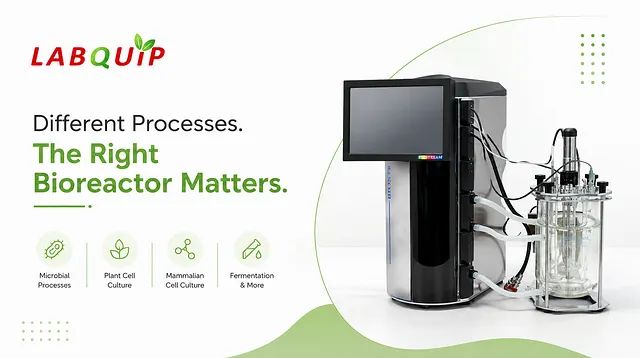
Biostream addresses these different requirements with laboratory bioreactor systems, high-performance fermenters, production-scale systems, photobioreactors, cell culture bioreactors and customized solutions. The range covers applications from small-scale research and development through pilot-scale processing and larger production requirements, with advanced monitoring and control options built around the process.
The real question, then, is not “Which bioreactor is the biggest?” or even “Which bioreactor can do everything?”
It is “What does my process actually need?”
Once the culture, scale and operating conditions are understood, the right system becomes much easier to define.
Need a bioreactor, fermenter or photobioreactor for a specific application? Talk to Labquip Asia to discuss the Biostream system that fits your process requirements, scale and cultivation goals.