Links are not yet activated.
Is this your press release? Add a link to submitpr.org on your website and verify it — activation is instant and free.
Or upgrade with KIN for permanent activation (from $19.95).
A FreezeDdryer may look simple from the outside, but the specifications behind it can changes how well it fits your research. Two systems can do the same basic job and still differ in sample capacity, collector temperature, monitoring features and compatible accessories. Those differences matter when you need to preserve sample, manage mixed workloads or build a repeatable process.If you’re comparing Lyophilization options, start with the application, not the catalogue. What materials will you process? How much sample needs drying in one batch? Which temperature conditions suit it? And how will you track progress? Once you’ve answered these, the shortlist shrinks and comparisons start to make sense.
1. Match Capacity with Your Workload
Capacity is usually the first spec people check, but litres alone don’t tell the full story. Look at how much ice the collector can hold before defrosting, how much sample you’ll load per batch, and which drying accessories your workflow calls for.
A compact benchtop unit suits small research batches, especially when bench space is tight. Larger sample loads or different drying arrangements may call for a console configuration. The right pick comes down to your real workload, the floor or bench space you have, and how often the system will run.
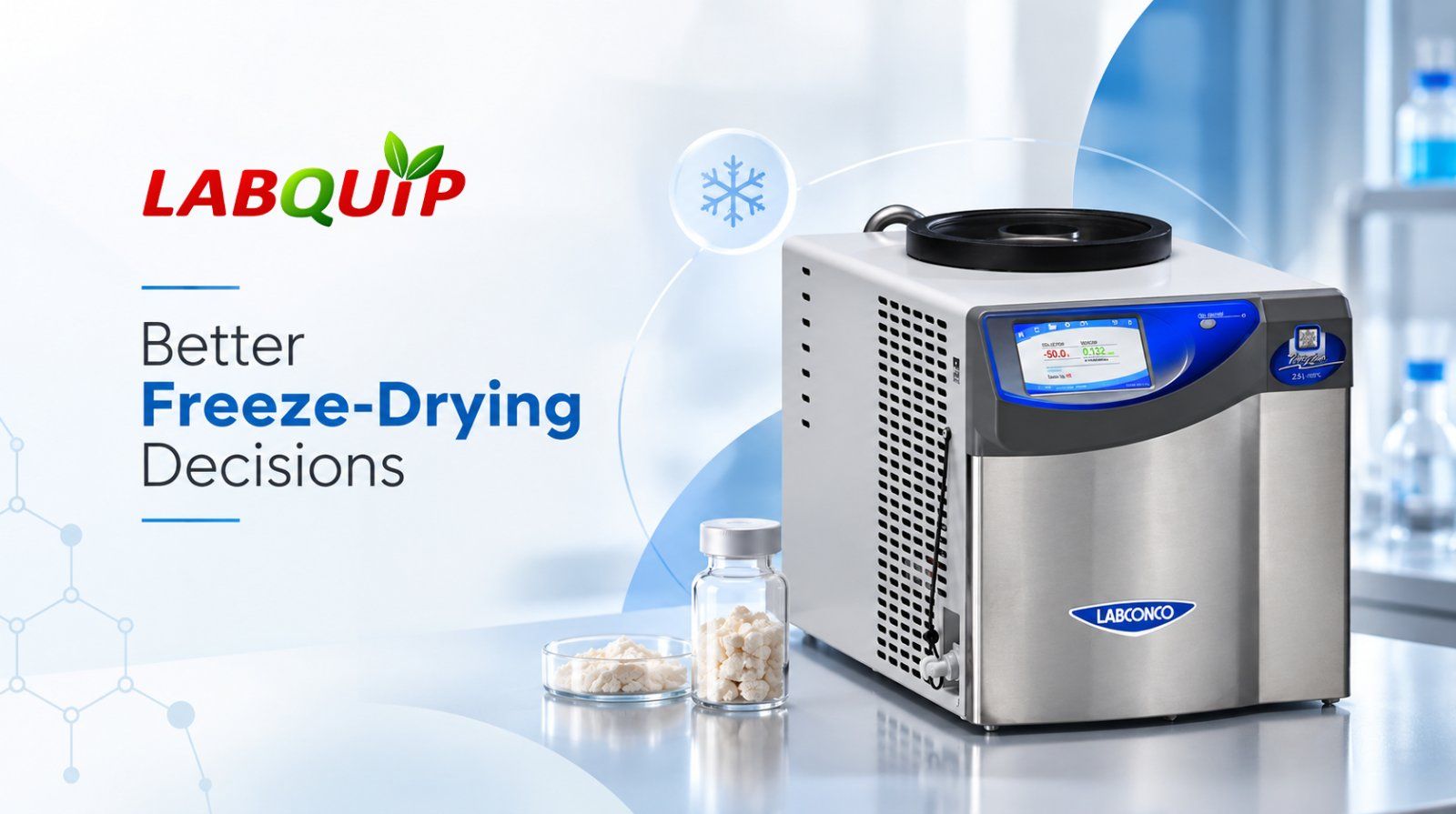
Labconco FreeZone freeze dryers come in both benchtop and console formats, with collector capacities from 2.5 to 18 litres across the range.
Think about next year as well as today. An undersized system leads to scheduling headaches, while an oversized one takes up room you may not have to spare. Weigh batch size, sample containers and expected usage together for a more practical comparison.
2. Understand Collector Temperature Options
During Lyophilization, frozen water passes straight into vapour under vacuum, and the cold collector traps that vapour as ice. So, the collector has to be right for both the material and the drying method.
Different samples and solvents call for different conditions. A setup that works well for aqueous samples may not suit every solvent-containing formulation. The ideal temperature is shaped by the sample’s composition, its eutectic or collapse characteristics, and the process you plan to run. It should never be chosen just because a model offers the lowest number on the spec sheet.
FreeZone models offer collector temperatures of -50°C, -84°C and -105°C, depending on the model.
Each supports different needs, but always check compatibility against your actual sample and solvent system.
Before you commit, talk through your sample composition and process with the supplier. That way the temperature range is chosen on evidence, not on a spec read in isolation.
3. Look Beyond the Display and Check Monitoring
A freeze dryer does more than hold a cold collector and a vacuum. Your team also needs clear information about what’s happening during the run, so they can spot changes early and keep visibility over the whole cycle.
When comparing models, check that collector temperature and vacuum level are easy to read.
Depending on the model, you may also get alerts, data logging and optional endpoint detection.
These help your team review process information and recognise when a closer look is needed.
FreeZone units include a display for key operating parameters, with exact capabilities varying by model. Selected systems also offer data logging and the optional End-Zone endpoint detection.
These tools support process oversight, but they don’t prove a sample has reached its required dryness. That call must follow the proper method and criteria for your application.
Accessories deserve equal attention. Depending on your workflow, you may need freeze-drying glassware, flasks, tray dryers or other compatible parts. A vacuum pump and suitable drying accessories may be sold separately, so confirm what’s included and what’s compatible before ordering. Checking the full configuration upfront saves you from unpleasant surprises once the main unit arrives.
4. Select Around Your Application
The most useful way to compare freeze dryers is to bring every specification back to the work it needs to do. A research lab processing small batches may prioritise compact size and simple operation. A facility with heavier workloads may care more about collector capacity, drying accessories and flexibility with different sample arrangements.
Before finalising a purchase, write down your must-haves: sample type, batch size, solvent compatibility, collector temperature, monitoring needs, available space and essential accessories.
Also consider whether the system must support specific lab procedures or documentation standards. A list like this helps you separate what’s genuinely necessary from what only adds complexity.
Labquip Asia represents Labconco, including FreeZone freeze dryers and lyophilizers for research and laboratory use. Its configurations give you options across different capacities, temperature ranges and drying arrangements.
Looking for freeze drying equipment that suits your application?
Get in touch with Labquip Asia to discuss your sample requirements, compare the relevant FreeZone configurations and identify the right accessories for your workflow. A well-informed specification review is a practical first step toward a purchase that fits the work ahead.