Links are not yet activated.
To activate, add a link back to submitpr.org from your website and contact @jaycosta on Telegram,
or pay via Solana (from $19.95) for instant activation.
If you are researching Robotic Knee Replacement Melbourne, you are probably trying to answer one practical question: how is robotic-assisted surgery different from a conventional knee replacement? Both approaches aim to relieve pain, improve function and help you return to daily life with a better-moving knee. The difference is not about a machine doing surgery on its own. It is about how the operation is planned and performed, and whether that extra technology is likely to benefit your individual knee, anatomy and goals.What both knee replacement approaches are designed to achieve
Whether surgery is robotic-assisted or conventional, the overall goal is the same: to replace the damaged joint surfaces in a way that reduces pain and improves movement. Knee replacement is commonly considered when arthritis has progressed to the point that non-surgical treatments such as exercise, physiotherapy, weight management, injections or medication are no longer giving enough relief.
In both techniques, the worn parts of the knee joint are removed and replaced with carefully selected implants. Your surgeon still performs the procedure. The decision between methods is not simply about newer versus older. It is about which approach is most appropriate after a thorough clinical assessment, imaging review and discussion about your symptoms, alignment, bone quality, activity level and expectations.
If you would like a background overview of standard surgery, you can read more about conventional total knee replacement.
Robotic Knee Replacement Melbourne: how robotic-assisted surgery differs
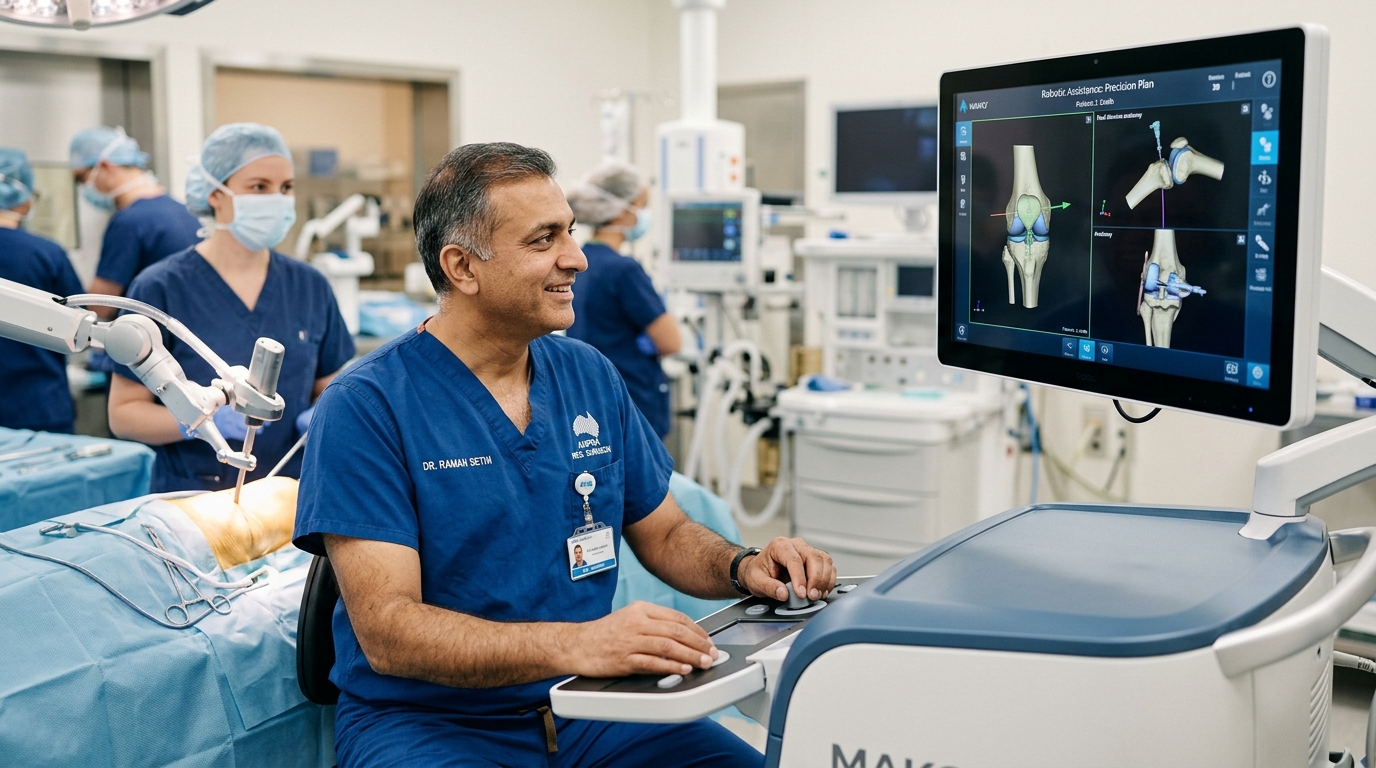
The main difference with robotic-assisted knee replacement is the use of advanced planning technology and real-time guidance during surgery. In general, this system helps your surgeon map the knee in detail and make highly measured decisions about implant positioning, alignment and bone preparation.
Pre-operative planning
Robotic-assisted surgery often involves detailed imaging and digital planning before the operation. That planning can allow the surgeon to study your knee anatomy closely and tailor the procedure to your individual structure. Conventional knee replacement also involves careful planning, but robotic systems may provide another layer of data and intraoperative feedback.
Surgical precision and execution
During robotic-assisted surgery, the robotic platform does not replace the surgeon. Instead, it assists by providing guidance and helping keep bone preparation within a planned area. This can support precision in implant placement and soft tissue balancing. In a conventional knee replacement, those same goals are achieved using established manual instruments and the surgeon’s experience, judgement and technique.
For some patients, that additional guidance may be appealing, especially if they want to understand how technology can support a more personalised approach. You can read more about robotic-assisted total knee replacement and how it is used in clinical practice.
What this may mean for recovery, alignment and surgical planning
Patients often ask whether robotic-assisted surgery means a faster recovery or a better long-term result. The honest answer is that recovery depends on several factors, including your pre-operative knee condition, general health, rehabilitation, pain management and how well the operation matches your anatomy and needs.
Robotic-assisted systems are designed to support accurate planning and placement. In knee replacement, small differences in alignment and implant positioning can matter. That said, conventional knee replacement remains a well-established and effective option for many patients when performed by an experienced orthopaedic surgeon.
Rather than assuming one method is automatically superior, it is more useful to look at questions such as:
How severe is your arthritis and deformity?
Is your knee anatomy straightforward or more complex?
What are your mobility goals after surgery?
Have previous injuries or surgeries changed the structure of your knee?
Which approach best suits your overall treatment plan?
These are the kinds of considerations that help shape a recommendation. A personalised assessment matters more than broad marketing claims.
Which option is right for you?
There is no single best option for every patient. Some people may be suitable for robotic-assisted knee replacement, while others may do very well with a conventional procedure. The right choice depends on your diagnosis, examination findings, imaging, lifestyle and the surgical objectives discussed in consultation.
If you are feeling unsure, that is completely understandable. Many patients are nervous about surgery, especially when new technology is involved. A good consultation should leave you with a clear explanation of the benefits, limitations and likely recovery pathway for your situation. It should also help you understand what surgery can realistically achieve.
At every stage, recommendations should be based on clinical evidence, informed consent and your individual needs. If you are considering surgery, reviewing your treatment plan can help you understand how decisions are made around timing, approach and recovery.
Ultimately, the difference between robotic-assisted and conventional knee replacement is not just the presence of technology. It is how that technology fits into careful surgical planning and whether it offers a meaningful advantage for your knee. The best next step is a comprehensive assessment with an orthopaedic surgeon who can explain your options in plain language and recommend the most appropriate pathway for you.