Links are not yet activated.
Is this your press release? Add a link to submitpr.org on your website and verify it — activation is instant and free.
Or upgrade with KIN for permanent activation (from $19.95).
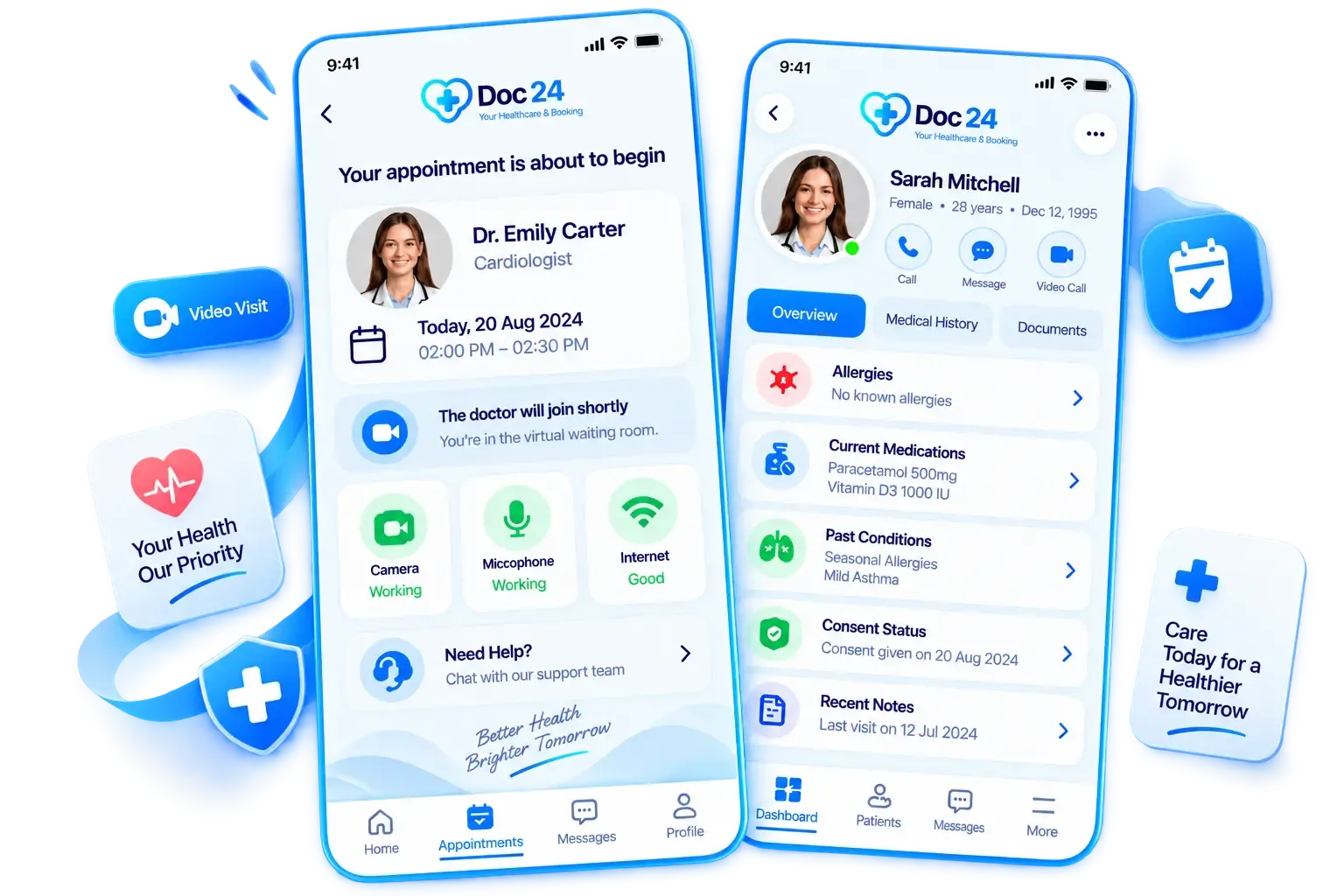
Promatics Technologies, an IT services company specializing in web development, mobile application development, software development, and AI-driven solutions, has showcased a telehealth app development case study focused on simplifying virtual healthcare journeys through thoughtful product design and opportunities for AI-powered enhancements.The virtual care platform concept addresses common challenges in digital healthcare, including appointment scheduling, pre-visit preparation, secure virtual consultations, and post-visit care coordination. By connecting these activities within a unified digital environment, the proposed solution aims to improve usability for patients, streamline provider workflows, and create opportunities for intelligent automation across the care journey.
Combining Virtual Care with AI-Driven Possibilities
As healthcare organizations increasingly explore digital transformation, AI technologies can help make virtual care platforms more responsive, efficient, and personalized. The platform concept developed by Promatics Technologies establishes a foundation for incorporating intelligent features into everyday healthcare workflows.
Potential AI applications include conversational assistance for appointment navigation, automated organization of patient-submitted information, intelligent reminders, and summarization of consultation notes for provider review. These capabilities could help reduce repetitive administrative tasks and make relevant information easier to navigate, subject to appropriate clinical oversight, privacy safeguards, and validation.
The platform's design emphasizes clear communication, accessible interfaces, transparent consent choices, and privacy-conscious workflows. This approach creates opportunities to integrate AI capabilities without compromising user control or the importance of healthcare professionals in clinical decision-making.
A Connected Digital Healthcare Experience
The proposed platform brings together patient and provider journeys within one coordinated digital experience.
Patients can explore available services, review appointment availability, book consultations, complete pre-visit information, enter a virtual waiting room, and access consultation summaries and follow-up instructions.
Healthcare providers can manage schedules, review relevant patient context, conduct virtual consultations, document outcomes, and share next steps through a dedicated workspace.
AI-assisted workflow enhancements could further support these journeys by helping organize intake information, facilitating navigation through conversational interfaces, and assisting with routine administrative documentation. Any AI-generated content intended for clinical use would require appropriate provider review and safeguards.
Key Features and Technology Architecture
The virtual care platform concept includes essential capabilities for coordinated digital healthcare delivery, such as:
Appointment scheduling and automated reminders
Identity-aware access and care-team roles
Secure video consultation integration
Digital intake and consent capture
Provider availability and calendar management
Patient messaging and document sharing
Audit trails for relevant platform activities
Configurable electronic medical record (EMR) integration
Opportunities for AI-assisted navigation and administrative workflow automation
The illustrative technology stack includes Flutter for cross-platform mobile applications, Next.js for web experiences, Node.js for backend services, and PostgreSQL for data management. Twilio and Infobip can support communication workflows, while APNs and Firebase Cloud Messaging can deliver mobile notifications. Stripe is identified as a potential payment integration, with JWT-based token management supporting authentication workflows.
The architecture can also be evaluated for future AI integrations, such as conversational interfaces, information extraction, and document summarization. The selection of AI models, data handling mechanisms, and third-party integrations would depend on project requirements, security assessments, and applicable healthcare regulations.
Improving Care Coordination Before and After Virtual Visits
An effective virtual care experience extends beyond the consultation itself. Patients need timely reminders, accessible documentation, and clear guidance on subsequent steps, while providers need organized workflows for reviewing and recording relevant information.
The proposed platform uses appointment events to support preparation and reminder workflows, with secure session tokens controlling access to virtual consultations. Relevant actions, including consent capture and document access, can be incorporated into auditable processes.
AI-enabled enhancements could complement these capabilities by helping users locate relevant information, organizing routine communications, and supporting the preparation of follow-up documentation. Such features would be designed with appropriate access controls, human oversight, and privacy protections.
Illustrative Outcomes and a Forward-Looking AI Approach
The case study includes illustrative operational metrics of a fictional 21% improvement in successfully completed virtual-visit check-ins, an 18% reduction in appointment-related support contacts, and a 14% improvement in post-visit instruction acknowledgement.
These figures are illustrative only and do not represent verified project results, measured AI performance, clinical outcomes, or compliance certifications.
The concept reflects an approach to healthcare product development that brings together user experience design, configurable digital infrastructure, and opportunities for responsible AI adoption. By identifying where intelligent automation could complement existing workflows, the platform provides a foundation for exploring more efficient and user-friendly virtual care experiences.
About Promatics Technologies
Promatics Technologies is an IT services company delivering web development, mobile application development, software development, UI/UX design, and artificial intelligence solutions. The company helps businesses develop digital products that align with their operational objectives and user needs.
Through its telehealth app development case study, Promatics Technologies demonstrates how digital healthcare platforms can combine intuitive design, connected workflows, scalable technology, and future-ready AI opportunities to support evolving virtual care requirements.
Explore the Telehealth App Development Case Study: https://www.promaticsindia.com/doc24-case-study
Media Contact: Promatics Technologies
Website: https://www.promaticsindia.com/