Links are not yet activated.
Is this your press release? Add a link to submitpr.org on your website and verify it — activation is instant and free.
Or upgrade with KIN for permanent activation (from $19.95).
A Press Brake Tool doesn’t need to look damaged to affect bend accuracy.Sometimes the first warning is a correction that keeps coming back. Or a surface mark that wasn’t there last week. Or a part that no longer matches the approved dimensions, even though nobody touched the program.
It’s easy to blame the material batch, the machine settings, or the last shift’s adjustments.
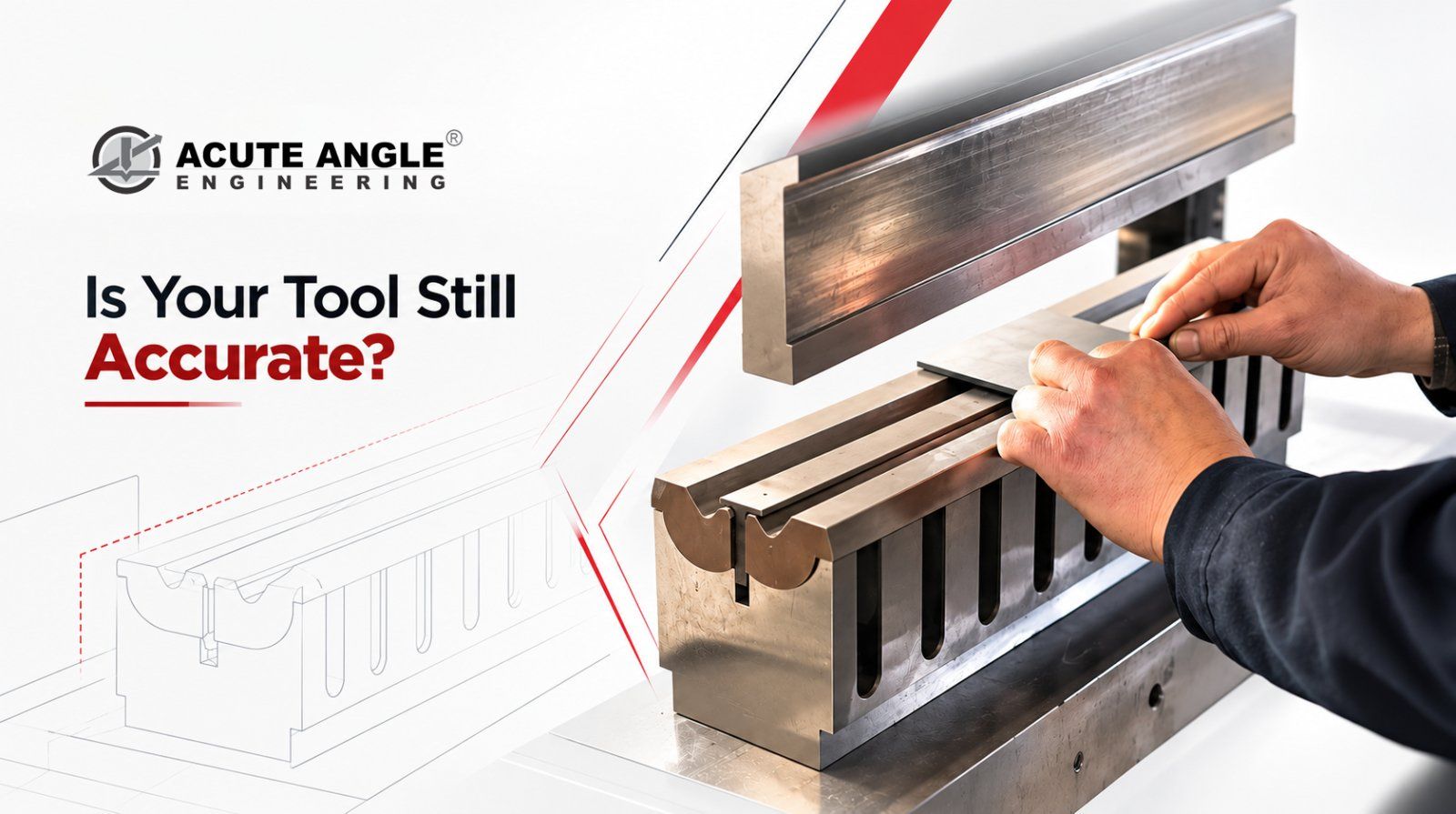
But the punch and die deserve a look too. Repeated contact with sheet metal, heavy loading, misalignment and surface damage slowly change tooling geometry. Catching that early means less rework, fewer rejected parts and clear answer to the big question: clean it, regrind it or replace it?
How Tooling Wear Develops
Every bend puts the Punch and Dies under load and in contact with the workpiece. Over time, that affects the surfaces doing the forming. How fast, and in what way, depends on material properties, production volume, alignment and the forces involved.
Two areas matter most:
• The punch tip and radius. Their geometry directly shapes how the material forms.
• The die shoulders. They contact and support the sheet throughout the bend.
Wear, dents, or material buildup in either spot can make finished parts less consistent.
Not all damage is the same, either:
• Gradual surface wear is slow and steady.
• Galling is when material transfers onto the tooling surface.
• Chipping comes from impact or excessive local loading.
• Cracks and permanent deformation are the serious ones and need immediate evaluation.
Knowing which one you’re dealing with matters, because swapping out a worn tool without finding out why it wore can bring the same problem straight back. If damage keeps appearing in the same place, look at alignment, loading, tooling arrangement, and the material being processed.
Press Brake Tooling Wear Signs to Watch For
The best warning signs usually show up in your parts before they show up on your tools. Bend consistency creeps. A mark appears from nowhere. An established setup suddenly needs a nudge every few runs.
When you inspect, check these areas:
• Punch tip and radius: flattening, chips, dents, or visible changes to the original profile.
• Die shoulders and V-opening: grooves, uneven wear, embedded material, or damaged edges.
• Working surfaces: scratches, galling, or buildup that can mark finished sheet metal.
• Clamping and seating surfaces: damage or dirt that stops tooling from seating properly and hurts repeatability.
• Segmented tooling: differences in segment height, condition, or seating that cause inconsistency along the bend.
One caution: drifting bend angles don’t automatically mean worn tooling. Material thickness, material strength, machine alignment, crowning, programming, and setup can all do the same thing.
A good test is to compare current results against a known-good setup under controlled conditions.
If everything else is identical and the problem persists, the tooling is your prime suspect.
Inspect Before You Replace
Start by cleaning the punch and die. Residue and transferred material can hide the real condition of the surface.
Then inspect the full working length, not just the spot where the defect showed up. Look for uneven wear, cracks, chips, dents, and profile changes. If you suspect dimensional change, measure against the original specification or a reference tool.
Also look at how the tooling is installed and used. Poor seating, misalignment, or tooling that’s wrong for the job can all cause premature wear.
If you run CNC Press Brake Tooling, keep simple records: recurring bend corrections, visible damage, tooling changes, inspection findings. Patterns jump out fast once they’re written down, and they make replacement decisions far easier.
A simple way to sort what you find:
1. Removable contamination (buildup, residue): clean it.
2. Changed geometry (worn radius, flattened tip, altered height): evaluate for regrinding or replacement.
3. Structural damage (cracks, severe chips, permanent deformation): remove from service immediately.
Damaged tooling should never stay in the machine just because it still fits. Cracked, severely chipped, or deformed tools need assessment by a qualified professional before any decision on reuse.
Repair, Regrind or Replace?
Not every worn tool is a write-off. The right call depends on the extent of damage and whether the original working geometry can be restored reliably.
• Cleaning is enough when the problem is only removable buildup.
• Professional regrinding can suit certain tools with suitable wear, provided critical dimensions are maintained.
• Replacement is usually the answer for cracks or permanent deformation.
Regrinding takes careful evaluation. Removing material can change tool height, radius, and other critical dimensions, which matters most when segments must work together as a matched set.
This is where specialist input pays off. Acute Angle Engineering offers Press Brake Tooling Systems for Amada, Trumpf, Wila, LVD, and Bystronic applications, along with repair, regrinding, and tooling modification services. The right solution depends on the tool’s condition, machine compatibility, and
what your bending application demands.
Don’t judge tooling by looks alone. Ask whether it can still hold the quality and dimensional accuracy you need. Regular inspection, correct setup, and timely maintenance catch small problems before they become production problems.
Dealing with worn or damaged press brake tooling?
Contact Acute Angle Engineering to discuss your requirements and explore repair, regrinding, or replacement options.