Links are not yet activated.
Is this your press release? Add a link to submitpr.org on your website and verify it — activation is instant and free.
Or upgrade with KIN for permanent activation (from $19.95).
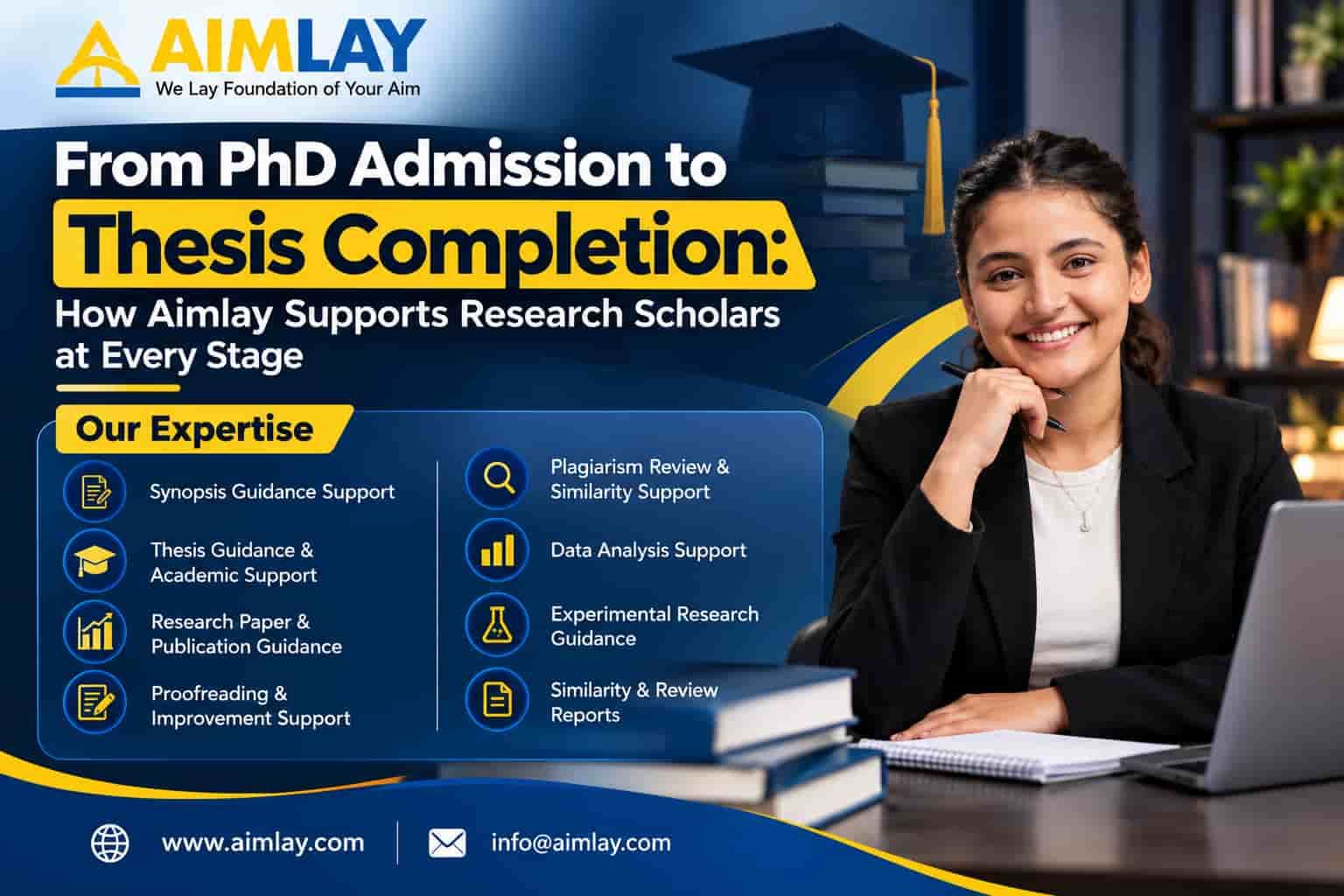
NEW DELHI, India- A PhD is a demanding academic journey that calls for curiosity, persistence, independent thinking, and careful research. The process can begin long before admission and continue through coursework, proposal development, data collection, analysis, thesis preparation, publication requirements, and the final viva or defence. For scholars who are also working professionals, managing these responsibilities alongside employment and family commitments can be especially challenging. Aimlay provides PhD-related guidance and research-support services intended to help scholars understand the process, organize their work, and prepare academic documents in line with relevant requirements. Requirements differ by university, discipline, and programme, so scholars should confirm official rules with their institution.
Step 1: Understanding admission requirements
Before applying, a prospective scholar should review eligibility criteria, entrance examination or interview requirements, application deadlines, research areas, supervisor availability, fees, and programme structure. A PhD is a long-term commitment, and the choice of institution and research area should be based on academic fit as well as practical considerations.
Aimlay’s admission guidance can help candidates understand the steps involved and identify information to verify. Applicants should rely on official university sources for final confirmation of eligibility, admission status, recognition, and programme conditions. A consultancy or support provider cannot replace the university’s formal decision-making process.
Step 2: Selecting and refining a research topic
A strong research topic should be relevant, manageable, and capable of being investigated using appropriate methods. Scholars may begin with a broad area of interest, then narrow it by reviewing existing research, identifying an unanswered question, and considering available data, time, resources, and ethical requirements.
Aimlay offers topic-selection and research-planning guidance to help scholars think through their proposed direction. Useful questions include: What problem does the research address? Why does it matter? What is already known? What gap remains? Can the question be answered with the methods and resources available? The researcher must make final academic decisions and ensure the topic is approved through the university’s process.
Step 3: Preparing the synopsis and proposal
The synopsis or research proposal usually outlines the background, problem statement, objectives, research questions, literature context, methodology, scope, and expected contribution. Requirements vary, so the university’s prescribed format should take priority.
Aimlay’s research support may include guidance on proposal structure, clarity, academic language, and alignment between objectives and methods. A well-organized proposal helps communicate the purpose of the study and provides a plan against which progress can be reviewed. It should reflect the scholar’s own understanding and be supported by appropriate sources.
Step 4: Building and organizing the thesis
A thesis commonly includes an introduction, literature review, methodology, findings or analysis, discussion, conclusion, references, and appendices, though the structure differs across disciplines. Scholars need to maintain accurate records, cite sources consistently, protect research participants where relevant, and follow institutional rules on originality and research ethics.
Aimlay provides thesis and dissertation guidance, including support with structuring, editing, proofreading, formatting, referencing, and submission preparation. This assistance can help improve readability and presentation, identify inconsistencies, and make the document easier to review. The researcher remains responsible for the authenticity of the work, accuracy of findings, and final content submitted.
Step 5: Research papers and publication guidance
Some doctoral programmes require publications, conference presentations, or other scholarly outputs. Publication can involve choosing a suitable journal or conference, preparing a manuscript, following author guidelines, responding to reviewer feedback, and understanding publication fees and timelines.
Aimlay offers research-paper and publication guidance, which may include manuscript refinement, formatting, journal-selection support, and submission-readiness assistance. Scholars should independently verify a journal’s scope, editorial policies, peer-review process, fees, indexing status, and reputation. Scopus and Web of Science are indexing services, not journals themselves. Publication acceptance cannot be guaranteed by a support provider.
Step 6: Preparing for presentation and viva
A viva or research presentation asks the scholar to explain the study, justify methodological choices, discuss limitations, and respond to questions. Preparation may involve summarizing the research problem, presenting key findings, reviewing literature, anticipating questions, and practicing clear explanations.
Presentation and viva guidance can help scholars organize slides, communicate complex ideas, and rehearse responses. The aim is not to memorize scripted answers, but to develop a confident and accurate understanding of the research. The scholar should be able to explain and defend the work independently.
A structured approach, with the scholar at the center
The PhD journey is not identical for everyone. Some scholars need help at admission; others require support with a synopsis, a difficult chapter, formatting, publication preparation, or a presentation. A useful support plan should be tailored to the project stage and university requirements.
Aimlay’s role is to provide guidance and academic-support services that help scholars approach these tasks in a more organized way. Before engaging a provider, scholars should request a clear description of services, deliverables, timelines, costs, revision terms, and confidentiality practices. They should ensure that all assistance complies with institutional policies.
A doctoral degree is earned through the scholar’s own research, learning, and academic evaluation. With careful planning, sustained effort, appropriate guidance, and transparent expectations, scholars can navigate the process with greater clarity and confidence.