Links are not yet activated.
Is this your press release? Add a link to submitpr.org on your website and verify it — activation is instant and free.
Or upgrade with KIN for permanent activation (from $19.95).
Biological research often begins with a simple question: how does a microorganism or cell respond when its growth environment changes? Answering it takes more than keeping a culture alive. You need to watch biological activity under defined conditions, track the variables that matter and understand how they shape the outcome.A laboratory bioreactor gives you that controlled environment. By pairing a suitable vessel with monitoring and regulation systems, it lets you study cultivation behaviour, compare conditions and refine operating parameters, whether you’re working in microbial research, cell culture or early-stage process development. Used as a bioreactor for research, it turns “I think this works” into data you can rely on.
But every application asks something different of the equipment. The organism, cultivation method, working volume and level of control all shape the right configuration. Laboratory bioreactor systems vary widely, so it pays to know what you need before you choose.
Microbial Cultivation and Cell Culture Studies
Microorganisms and cultured cells respond differently to their surroundings. Nutritional needs, oxygen demand, growth patterns and sensitivity to conditions all vary, so choosing equipment starts with understanding these differences.
In microbial work, you may be exploring bacterial growth, yeast behaviour, fermentation conditions or the effect of nutrient changes. Agitation and aeration influence oxygen transfer and mixing, while temperature and pH drive microbial activity.
Cell culture brings other considerations. Mammalian cells, for instance, may need carefully managed conditions and gentle handling. Temperature, pH and dissolved oxygen can affect viability, growth and productivity, so the right control strategy depends on the cells and the goal of your experiment.
Whatever the study, vessel design, available sensors, mixing arrangement and gas delivery options decide whether a system is the right fit.
Process Control and Experimental Optimisation
Biological systems keep changing. As a culture develops, its nutrient consumption, metabolism and oxygen need shift, and conditions that suit one stage may not suit the next.
Tracking pH, temperature and dissolved oxygen helps researchers identify these shifts. Temperature regulation holds the intended thermal environment, pH control limits unwanted swings in acidity or alkalinity, and dissolved oxygen readings reveal oxygen availability, especially in aerobic cultivation.
These readings matter most when read alongside agitation and aeration. Rising biomass, for example, can increase oxygen demand, which means checking whether your current mixing and aeration still hold up. Any adjustment should be judged against the organism, vessel geometry and process objectives.
Optimisation means testing variables systematically and interpreting the data: comparing conditions, spotting promising ranges and tracing variation between runs. Not every experiment needs the same level of automation, though. The right laboratory bioreactor depends on how complex your process is, which parameters you are studying and how much control you need for meaningful results.
Working Volume and Scale-Up Considerations
Working volume affects mixing, gas transfer, sampling and how much material you have left for analysis. Early screening may call for a small vessel, while later runs may need more capacity to generate enough biomass or product.
Moving to a bigger vessel needs care. Mixing time, oxygen transfer and heat removal don’t change in direct proportion to volume, so conditions that work well at small scale may need further investigation before they carry over.
That’s why nominal capacity shouldn’t be your only yardstick. Control parameters, sensor compatibility, vessel configuration and your intended development pathway matter just as much. Aim for a setup that meets today’s needs without ignoring the challenges of scaling up later.
BioStream Bioreactor Systems from Labquip Asia
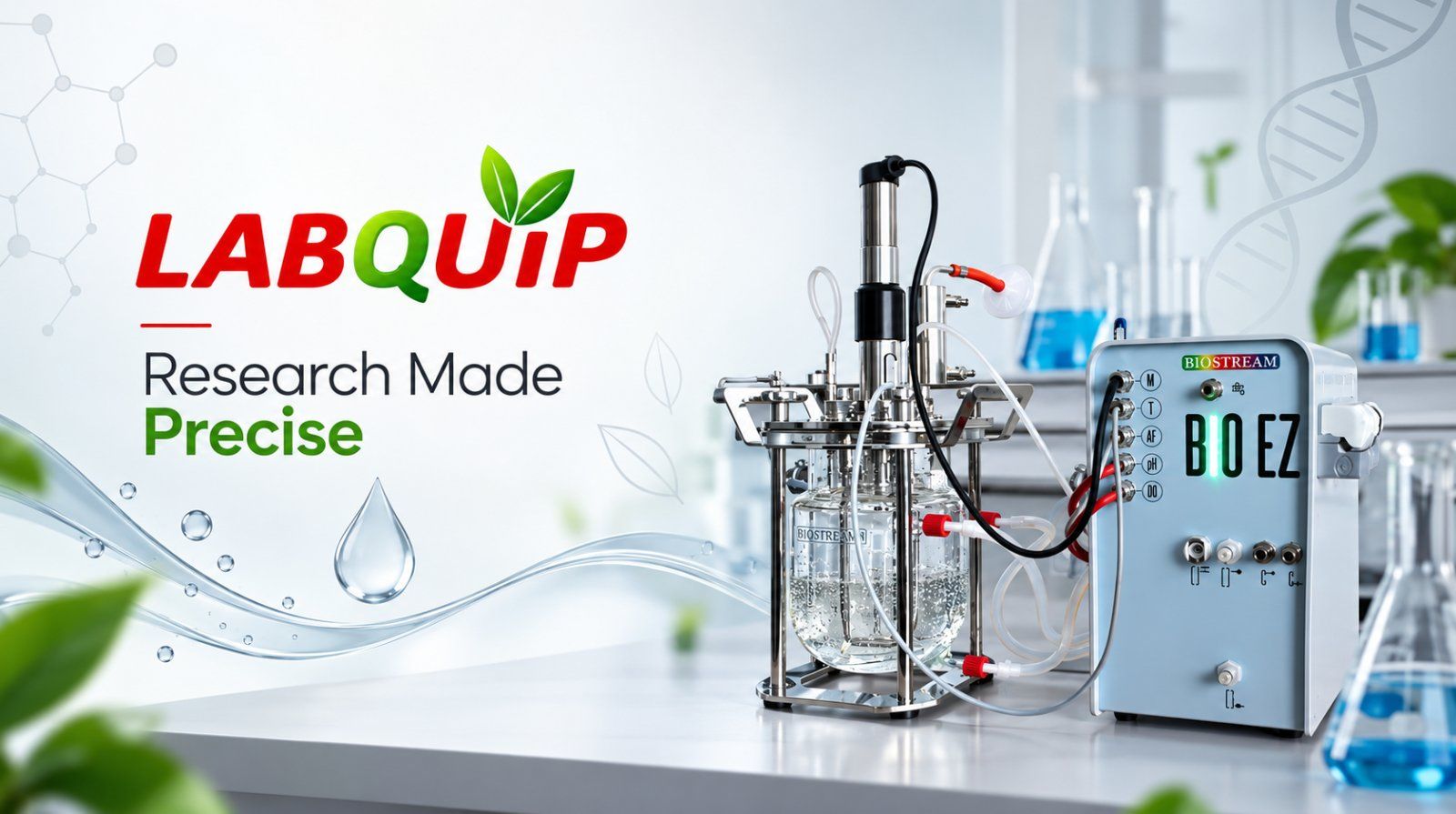
Looking for a dependable laboratory bioreactor supplier in India? Labquip Asia represents BioStream bioreactor and fermenter systems for research and process development. Working volumes run from 50 mL to 15 litres, with control of pH, temperature and dissolved oxygen, depending on the configuration.
Before choosing, define your cultivation method, required volume, critical parameters and monitoring needs. These details point you to the configuration that fits.
Make Your Next Cultivation Study Count with the Right Equipment
Good results start with the right setup. Tell the Labquip Asia team about your organism, your working volume and the parameters you need to control, and they’ll help you find the BioStream laboratory bioreactor system that fits your work.
Contact Labquip Asia today to discuss your requirements and explore the BioStream range.