Links are not yet activated.
To activate, add a link back to submitpr.org from your website and contact @jaycosta on Telegram,
or pay via Solana (from $19.95) for instant activation.
HELSINKI, FINLAND - September 2026 - Selecting pedals for a simulator can become increasingly complex as more equipment becomes available to home and competitive sim racers. To help drivers make more informed decisions, Apex300 has published a practical guide explaining how to evaluate pedal sets according to driving style, hardware compatibility and future upgrade plans.The resource is aimed at sim racers across Finland and Central Europe who are researching their next equipment purchase. It focuses on the decision-making process rather than presenting a single product as the right choice for everyone.
Why a Pedal Set Deserves Careful Consideration
A simulator's pedals are responsible for translating throttle, brake and clutch inputs into digital controls. For many drivers, braking is particularly important because repeated and predictable brake inputs can influence consistency from lap to lap.
As simulator equipment becomes more advanced, drivers may encounter load-cell, hydraulic and active pedal systems. Each approach can produce a different interaction between the driver and the simulator.
The best pedal set for sim racing therefore depends on the person using it and the equipment surrounding it.
Start With Your Existing Simulator
One of the simplest ways to narrow down pedal choices is to assess the current simulator.
A driver should consider the cockpit or mounting platform first. The available mounting points and physical space can determine which pedal configurations are practical.
The wheel base and steering system should also be considered. A high-performance steering setup may be paired with pedals that provide suitable adjustment and braking characteristics, while a beginner may have different priorities.
This makes compatibility an important part of the buying process.
Load Cell, Hydraulic or Active?
Load-cell pedals measure force applied to the brake rather than relying only on pedal travel. This can provide a more consistent method of controlling braking input.
Hydraulic pedals use a hydraulic mechanism to produce resistance and a progressive feel. They may appeal to drivers looking for a more substantial braking interaction.
Active pedals use electronically controlled force and can provide extensive adjustment through software, depending on the system.
These technologies should not simply be viewed as levels of “better” and “worse”. They provide different characteristics and may suit different simulator requirements.
What Should You Look For?
Before choosing racing pedals, drivers can consider several questions:
How do I normally race?
GT, Formula, rally and other disciplines can create different preferences for pedal configuration and feel.
How much adjustment do I need?
Some drivers want extensive control over pedal position, travel and resistance, while others prefer a simpler configuration.
Will the pedals fit my cockpit?
Mounting dimensions and pedal-plate compatibility should be checked before purchase.
Do I need three pedals?
A clutch can be useful for drivers who regularly use manual transmission simulation, but it may not be essential for every setup.
Am I planning more upgrades?
Future equipment should be considered so the current purchase does not unnecessarily restrict the next stage of the simulator.
Research Before Buying
A useful buying process starts with understanding requirements rather than immediately selecting a product.
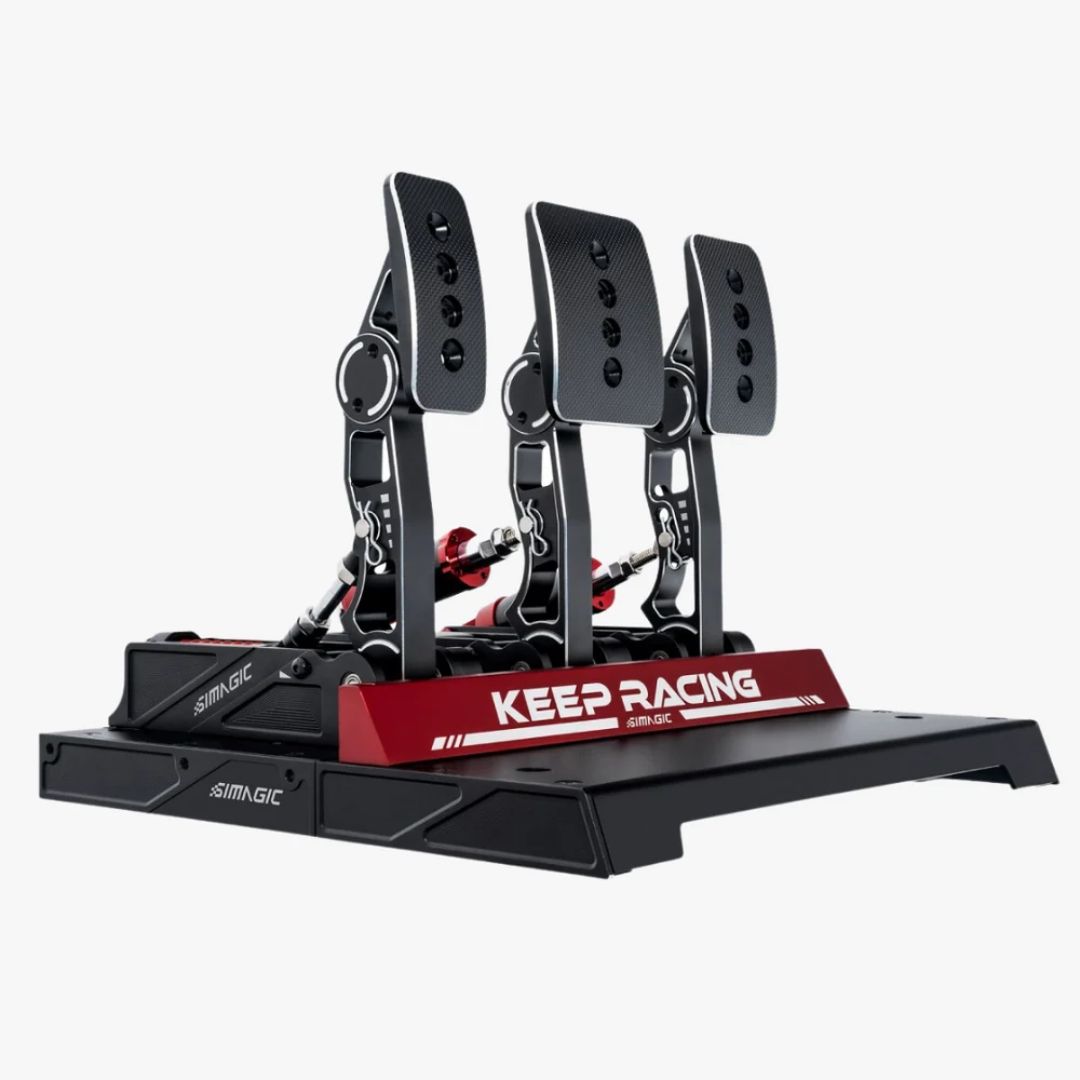
Apex300's pedals collection allows sim racers to explore available pedal options, while its Best Sim Racing Pedals 2026 guide provides additional context for comparing technologies and setup considerations.
Together, the resources are intended to help users move from general research towards a more informed equipment decision.
Why Setup Compatibility Matters
A pedal upgrade does not exist independently from the rest of a simulator.
Pedal placement affects seating position. Seating position affects steering wheel placement. Cockpit dimensions can influence mounting options. Future hardware upgrades may also change the requirements.
Considering these relationships before purchasing can reduce the likelihood of having to replace compatible equipment later.
A Setup-Based Approach
Instead of asking which pedal set is universally the best, sim racers can ask:
Which pedal system provides the characteristics, compatibility and adjustment options that match my simulator?
This is a more useful question because simulator builds vary considerably.
A beginner building a first dedicated rig may prioritise simplicity and compatibility. An experienced driver may place greater emphasis on braking characteristics, adjustment and detailed control.
About Apex300
Apex300 is a Finland-based D2C sim racing equipment retailer serving the European market. The store focuses on simulator components and related gaming hardware for customers building, maintaining or upgrading racing setups.
Pedal collection:
https://apex300.com/collections/pedals
Buying guide:
https://apex300.com/blogs/news/how-to-choose-best-pedal-set-for-sim-racing