Links are not yet activated.
Is this your press release? Add a link to submitpr.org on your website and verify it — activation is instant and free.
Or upgrade with KIN for permanent activation (from $19.95).
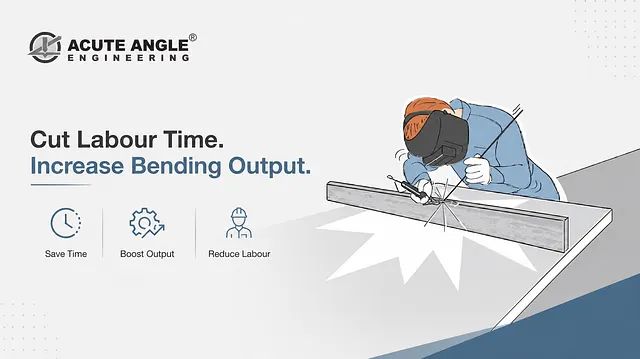
In sheet metal fabrication, labour cost is not only about how many people are working on the shop floor. It is also about how much time they spend setting up machines, changing tools, positioning components, repeating bends, handling parts and correcting mistakes. A process that takes only a few extra minutes per component can become a significant cost when the same job runs into hundreds or thousands of pieces.This is where the right press brake tooling can make a practical difference. The goal is not simply to add more tools to the machine. It is to use the right tooling arrangement for the job so operators can spend less time on unnecessary manual work and more time producing consistent parts.
Where Bending Labour Costs Rise
A press brake may complete a bend in seconds, but the work around that bend can take considerably longer. An operator may need to position the sheet, adjust the setup, change tooling, perform several bending operations and move the component for the next stage. When the same sequence is repeated throughout a production run, operator hours quickly add up.
This becomes even more noticeable when a component requires multiple bends or different tooling configurations. Frequent setup changes can slow production, while manual handling between operations adds more time to every part. Rework creates another hidden cost. If a bend is inconsistent because the tooling or setup is not suitable, the operator may have to correct the component or produce it again.
The right press brake bending tools can help reduce some of these unnecessary activities. By matching the tooling to the material, thickness, bend radius and component geometry, manufacturers can build a more straightforward bending process instead of relying on repeated adjustments and manual intervention.
What Better Bending Tools Help
Not every sheet metal component needs the same tooling. A simple bend may require a standard punch and die, while a more complicated profile may need a different tool geometry or a combination designed specifically for the application. Understanding this difference is important when the objective is to improve productivity without compromising bend quality.
The relationship between the press brake punch and press brake die has a direct impact on how the material is formed. The die opening, punch profile and required bend radius need to suit the material and thickness being processed. For common applications, a suitable V die press brake setup can provide a repeatable bending process without unnecessary changes between operations.
This is where good sheet metal bending tools become more than just machine accessories. Proper tooling can make setups easier to repeat, reduce unnecessary adjustments and help operators maintain consistent results across a production batch. Over time, those small improvements can translate into fewer labour hours per component.
The same principle applies to sheet metal bending tooling used across different machines and production requirements. Tool compatibility matters, but so does the way the tooling fits the actual job being produced.
CNC Tooling for Faster Production
CNC press brakes have made bending more repeatable, but the machine can only perform as efficiently as the tooling allows. CNC press brake tooling is designed around the requirements of automated and repeatable bending, helping operators maintain consistent setups while reducing unnecessary intervention during production.
For manufacturers working with different machine platforms, tooling compatibility also becomes important. European style press brake tooling, along with systems used with machines such as Amada and Trumpf, can be selected according to the machine and application. Amada press brake tooling and Trumpf press brake tooling, for example, are relevant when manufacturers need tooling that matches their respective press brake systems and production requirements.
The objective should not be to select tooling simply because it fits the machine. The better question is: Will this tooling make the actual production process easier and more repeatable?
When the answer is yes, the benefits can extend beyond bending accuracy. A well-planned setup can reduce tool-changing time, minimise operator adjustments and keep the production process moving with fewer interruptions.
When Custom Tooling Saves More
Standard tooling is suitable for many everyday bending applications. But there are jobs where forcing a complex component through a standard setup can create more work than it saves. Multiple bends, unusual profiles, forming operations or specific component geometries may require additional setups and considerable manual handling.
This is where special press brake tools and customized bending tools can become a practical production solution.
Instead of adapting the component to a standard tool, a special tool can be designed around the component and its manufacturing requirement. Depending on the application, this may allow certain operations to be combined, reduce the number of setups or minimise manual repositioning. Special-purpose metal forming tools can also be developed for applications that go beyond conventional bending.
The financial benefit is not necessarily about reducing the number of people on the shop floor. It is about making better use of the people already there. If an operator can produce more components in the same working hours because the tooling reduces unnecessary setup and handling, the labour cost per component can come down.
That is why tooling should be looked at as part of the production process rather than as a separate machine component. A well-designed tooling solution can support faster production, consistent bending and less manual effort — especially when the tooling is matched closely to the application.
Reduce Manual Effort with the Right Tooling
Every production line has different bending requirements, so there is no single tooling setup that works for every component. The right solution depends on the machine, material, thickness, bend geometry, production volume and the amount of manual handling involved.
As a press brake tooling manufacturer in Ahmedabad, Gujarat, Acute Angle Engineering develops standard and application-specific tooling solutions for sheet metal bending and forming requirements. From CNC-compatible tooling to special press brake tools and customized solutions, the focus is on helping manufacturers achieve a more efficient and repeatable bending process.
If your current bending process involves too many setups, frequent tool changes or unnecessary manual effort, the right tooling may be worth looking at before adding more labour or production time.
Talk to Acute Angle Engineering about your bending application and find a tooling solution designed around the way you actually manufacture.