Links are not yet activated.
Is this your press release? Add a link to submitpr.org on your website and verify it — activation is instant and free.
Or upgrade once for permanent activation (from $19.95, pay with crypto).
CURATION - CIRCULATIONHow a Brazilian editorial curator researches, interprets and builds bridges so that African fashion can reach new audiences, territories and markets.
While the international fashion system still tends to organize its narrative around a limited number of capitals and traditional centers, another creative geography is taking shape.
It exists in Lagos, Johannesburg, Ethiopia, Dar es Salaam, Windhoek, Uganda and in so many other territories where designers, brands, models, photographers, producers and entrepreneurs are building new languages for contemporary fashion.
This is not a fashion that is arriving.
It is a fashion that already exists, produces, experiments, moves professionals and develops its own markets.
What is still changing is the way this production circulates, reaches new audiences and is perceived internationally.
It is within this space between creation and recognition that Eliana Oliveira found her field of research.
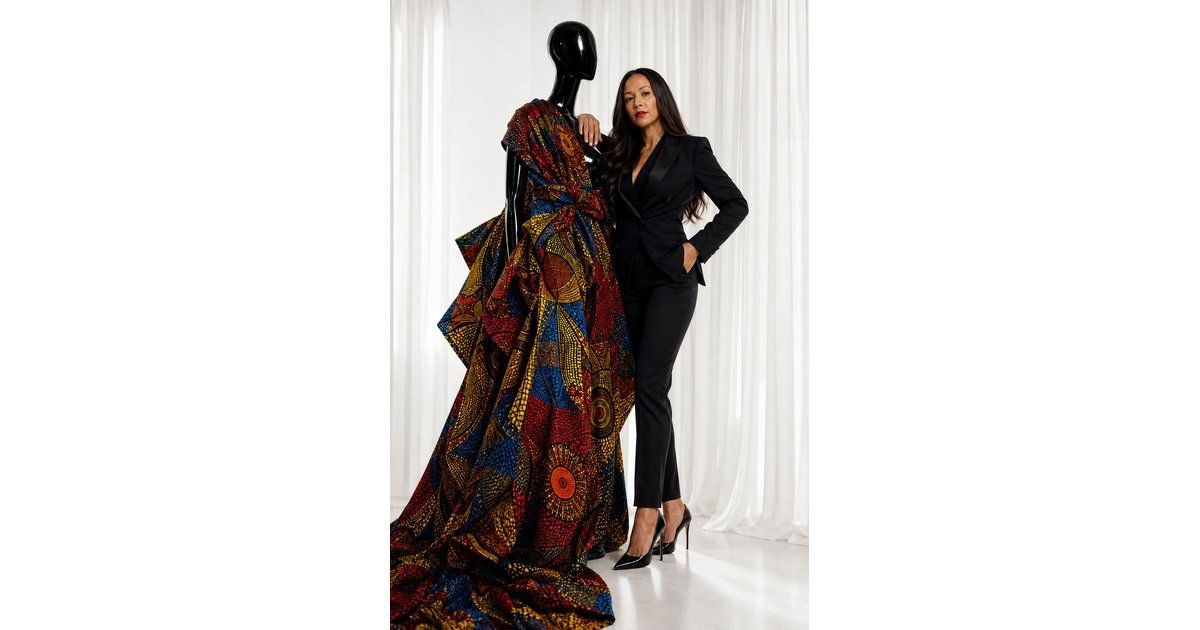
Editor-in-Chief of Le Afrique Style Brazil, writer, researcher and Editorial Curator of African Fashion and Creative Markets, Eliana has developed an approach focused on understanding the forces that exist behind the image.
More than following trends, she seeks to understand the creative systems that produce them.
And from this perspective, one question began to guide her curatorial work:
How can a creation cross borders without losing what makes it unique?
The Question That Changed the Way She Sees
Her connection with African fashion was built through experience and observation.
As she encountered different realities across the continent, Eliana recognized a contemporary, modern, distinctive and, in many cases, futuristic production that still remained distant from the center of the international fashion narrative.
The realization was decisive.
“It was there that I began to understand more deeply the African fashion industry and its market. And I realized that this modern, futuristic and distinctive fashion was still not being seen on the global fashion week calendar.”
From that realization, her gaze moved beyond aesthetic references.
She began investigating an industry.
African Fashion as a Creative Ecosystem
For Eliana, fashion weeks are much more than events on the international calendar.
They are platforms.
Spaces for launching collections, discovering talent, building brands, developing business, creating relationships and enabling professional circulation.
Her research has taken her through different circuits and experiences connected to South Africa, Seychelles islands, Gambia, Sierra Leone and Congo, among other markets.
In each territory, she encountered different structures, distinct languages and particular contexts.
But she also identified a common characteristic: the ability to transform cultural heritage into innovation.
This perception became one of the foundations of her work as a curator.
African fashion should not be presented merely as an aesthetic reference for the West.
It should be observed in its complexity: creative production, industry, market, identity and heritage.
Because when we look only at aesthetics, we risk seeing only the surface.
Curation begins when we decide to look deeper.
The True African Diamond
It is within this context that Eliana uses an image that synthesizes her vision: the “true African diamond.”
Not as a reference to the continent’s mineral wealth, but as a metaphor for a creative power that can still reach a greater level of international recognition.
That potential exists in the designers.
In the brands.
In the professionals.
In the materials.
In the techniques.
In the markets.
In the narratives.
And, above all, in the ability to transform cultural heritage into a contemporary language.
For Eliana, the future of African fashion does not necessarily lie in reproducing what the international market expects to find when it looks toward the continent.
It lies precisely in the freedom to create from its own references.
The true value lies in what is born from within and manages to engage with the world without ceasing to be what it is.
Ancestry Has Not Been Left in the Past
One of the central questions in her research is the way ancestry participates in contemporary creation.
It can appear in a print.
In a texture.
In a construction.
In a raw material.
In a silhouette.
Or simply in the narrative that sustains a collection.
Ancestry, therefore, does not have to mean the past.
It can mean continuity.
It can become raw material for the future.
It is in this combination of memory and innovation that Eliana identifies one of the most compelling forces within fashion produced on the continent.
Not as a repetition of what has already been done, but as a possibility for creation based on what remains alive.
It is within this dialogue between what has been inherited and what has yet to emerge that many contemporary languages find their strength.
When Curation Becomes a Bridge
This is where curation takes on another dimension.
Selecting a creation is only the beginning.
It is necessary to understand its context, its language, its origin and what it can communicate when it encounters a different audience.
In this sense, curation builds bridges.
Bridges between creators and readers.
Between brands and new audiences.
Between identity and market.
Between different territories.
Le Afrique Style Brazil was born from this perspective.
The publication became a platform for bringing Brazilian audiences closer to creators, professionals, stories and markets that often remain outside the dominant narrative of international fashion.
But the proposition does not end with publication.
Publication is the starting point for a larger conversation.
Because circulation is not simply moving an image from one territory to another.
It is creating context.
It is presenting a language.
It is bringing people closer.
It is allowing a creation to be seen beyond the place where it was born, without requiring it to abandon its identity in order to be understood.
This is where curation can become a tool for connecting creative ecosystems.
Circulation Is Not Simply Movement
The fact that a creation crosses a border does not necessarily mean that it has circulated.
Circulation requires encounter.
Context.
Interpretation.
Recognition.
And, in certain circumstances, opportunity.
This is why editorial curation occupies a strategic position within the fashion ecosystem.
It identifies.
Selects.
Contextualizes.
Presents.
Connects.
And creates pathways for a narrative to reach territories where it was previously absent.
It is a form of communication that does not end with publication.
It begins there.
Innovation, in this case, is not simply about discovering new creators.
It is about considering what can happen after they are discovered.
Where can this narrative go?
Who needs to know about it?
What dialogue might emerge?
What market might open?
What connection has not yet been made?
It is through this set of questions that curation moves beyond selection and begins to participate in the construction of circulation.
The Cover as a Territory of Representation
This vision has also transformed the way Eliana constructs the visual identity of her publication.
At Le Afrique Style Brazil, covers function as spaces of representation.
Models, creators, industry professionals and personalities from different African countries occupy this territory to reveal an essential idea: There is no single image capable of representing Africa.
There are many Africas.
Many identities.
Many aesthetics.
Many futures.
The choice of a minimalist visual language reinforces this position.
By removing excess, the publication allows each person’s face, presence and identity to take center stage.
It is an aesthetic decision that becomes an editorial decision.
And an editorial decision that becomes a cultural positioning.
The image ceases to be merely an image.
It becomes territory.
A Curator Who Researches Before Defining
The authority of a curator does not lie solely in the title they hold.
It lies in the journey that sustains their choices.
Eliana’s methodology combines research, observation, editorial coverage and direct experience with fashion.
The concept she calls Experiential Curation adds another layer to this process.
To understand a creation, she also considers what happens when a garment meets the body: its weight, movement, drape, texture, ergonomics, pattern-making architecture and the intention behind the cut.
It is a reading that begins before writing.
First comes experience.
Then interpretation.
Finally, the editorial narrative.
This way of observing allows the garment to be understood not merely as a visual object, but as a language.
And every language needs someone willing to listen.
From Image to Opportunity
Perhaps this is where curation reveals its most contemporary dimension.
An image can attract attention.
A narrative can create identification.
But a well-constructed curatorial approach can create the context necessary for a creation to be understood and find new spaces of circulation.
This process is particularly relevant to African fashion because many of its creators are no longer simply building collections.
They are building brands.
Developing markets.
Creating languages.
Building communities.
Establishing professional relationships.
And thinking globally.
The challenge is not to create for them.
It is to recognize what is already being created and help build pathways for those creations to be seen, understood and recognized in other territories.
This is an important distinction.
Curation does not replace the creator.
It creates passage.
A New Way of Making African Fashion Circulate
It is within this passage that Eliana occupies a particular position within fashion communication.
Not merely as someone who observes.
Not merely as someone who publishes.
But as someone who seeks to understand what can happen when a narrative crosses a border.
Her vision begins with fashion, but it does not end there.
It encompasses culture.
Industry.
Market.
Communication.
Heritage.
Identity.
And human relationships.
It is an ecosystem vision.
Because no creator exists in isolation.
Behind a collection, there is a story.
Behind a brand, there is a community.
Behind a technique, there is knowledge.
Behind a raw material, there is a territory.
And behind a narrative, there is someone who wants to be recognized for what they have truly created.
Curation enters precisely into this space: between what already exists and what may still find its way into the world.
A New Position Within the International Fashion System
Today, Eliana’s work exists at a particularly contemporary intersection: fashion, culture, communication and African creative markets.
It is not about looking at Africa as a passing trend.
It is about recognizing a creative territory that already produces, already creates, already moves professionals and already builds its own markets.
The question, therefore, is no longer whether African fashion can engage with the world.
It already is.
The question is how to expand the quality, visibility and scale of that dialogue.
And this is precisely where her curation finds its purpose.
As an editor, she creates space for new narratives.
As a researcher, she investigates what exists behind the image.
As a curator, she selects, interprets and contextualizes.
And as a communications professional, she builds bridges so that these narratives can cross borders.
Not to speak on behalf of those who create.
But to create the conditions for those who create to be heard.
Expand the Map
Perhaps this is the most precise synthesis of her vision.
Eliana Oliveira does not seek to erase the traditional centers of fashion.
She seeks to expand the map.
To make new creative territories visible.
To allow new names to be recognized.
To give different identities space.
And to ensure that fashion produced in Africa is understood not only for its beauty, but for its creative intelligence, productive capacity, identity and market potential.
Because expanding the map also means expanding the possibilities for encounter.
Between those who create and those who are looking.
Between those who have a story to tell and those who have not yet had the opportunity to discover it.
Between territories that have always been connected, but can still build new relationships.
Perhaps the future of global fashion does not lie only in discovering new places.
Perhaps it lies in learning to see, differently, the places that have always been producing.
After all, Africa is not arriving in contemporary fashion.
It was already there.
What is changing is the way the world looks at it.
And it is precisely within this space between what already exists and what still needs to be recognized that Eliana Oliveira builds her curation.
An editorial curation in motion.
A research journey that crosses borders.
A bridge between identity, heritage and market.
And a new way of making African fashion circulate.
Not as someone who takes a story somewhere else.
But as someone who creates the conditions for different worlds to finally meet.