Links are not yet activated.
Is this your press release? Add a link to submitpr.org on your website and verify it — activation is instant and free.
Or upgrade with KIN for permanent activation (from $19.95).
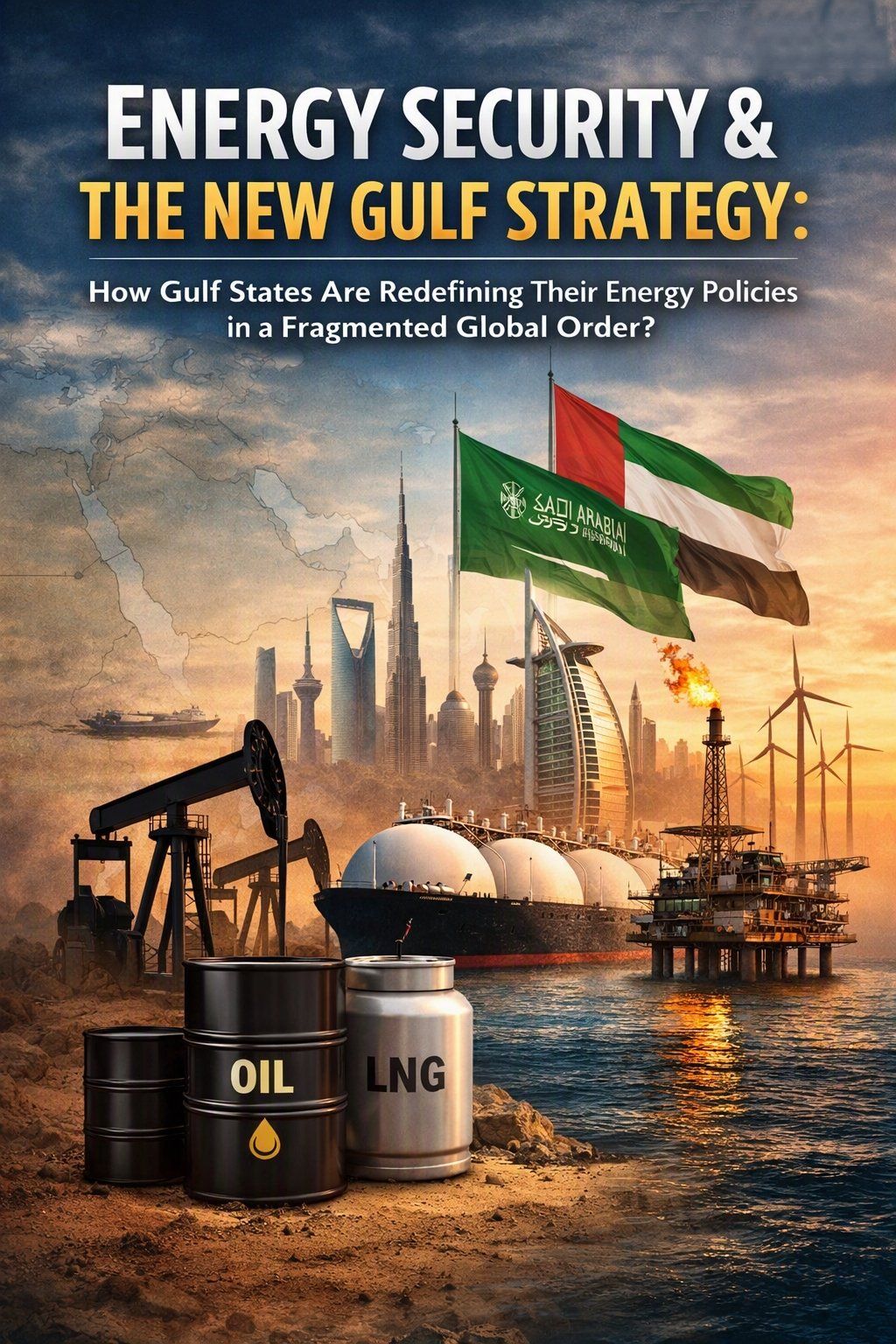
Iran – October 2026: Iranian international author, social activist, Middle Eastern Strategic Affairs & Global Geopolitics Amir Ghahraman Pour has released a new geopolitical analysis examining how Gulf states are redefining their energy strategies amid a fragmented global order.The study highlights how Saudi Arabia, the UAE, and Qatar are combining long‑term production stability with rapid investment in renewables, hydrogen, and advanced energy technologies. It also explores how geopolitical tensions, supply chain disruptions, and rising energy nationalism are pushing Gulf states toward greater flexibility, diversification, and strategic neutrality — positioning them as central stabilizers in the evolving global energy landscape.Energy Security & The New Gulf Strategy : How Gulf States Are Redefining Their Energy Policies in a Fragmented Global Order ?
Introduction
Global energy markets are undergoing a historic transformation driven by geopolitical tensions, supply chain disruptions, and the accelerating transition toward renewable energy.
In this shifting landscape, Gulf states have emerged as decisive actors, recalibrating their strategies to secure long-term stability, diversify economic portfolios, and expand geopolitical influence.
Energy security is no longer just about oil supply — it is now a multidimensional strategy involving diplomacy, technology, renewables, and global partnerships.
The Gulf’s New Strategic Vision
Gulf states — particularly Saudi Arabia, the UAE, and Qatar — are redefining their energy policies through :
– Long-term production stability
– Investment in renewable energy and hydrogen
– Strategic partnerships with China, the U.S., and Europe
– Regional energy interconnectivity projects
– Technological modernization of oil and gas infrastructure
This new vision positions the Gulf as a global energy stabilizer rather than merely a supplier.
Energy Security in a Fragmented World
The global order is increasingly fragmented due to :
– Russia–Ukraine war
– U.S.–China competition
– Supply chain vulnerabilities
– Rising energy nationalism
– Climate-driven policy shifts
In this environment, Gulf states have adopted a strategy based on flexibility, diversification, and geopolitical neutrality.
OPEC+ and Strategic Coordination
OPEC+ has become a central pillar of Gulf energy diplomacy :
– Coordination with Russia strengthens market stability
– Production cuts maintain price balance
– Long-term agreements reduce volatility
– Unified messaging enhances global influence
This coordination gives Gulf states unprecedented leverage in global markets.
The Rise of Renewable Energy
Gulf states are investing heavily in :
– Solar mega-projects
– Wind energy
– Green hydrogen
– Carbon capture technologies
– Smart grids and AI-driven energy systems
These investments are not symbolic — they are part of a strategic shift toward becoming leaders in the global energy transition.
Geopolitical Implications
The new Gulf strategy reshapes regional and global dynamics :
– Greater autonomy from Western pressure
– Stronger ties with China through energy and infrastructure
– Balanced relations with the U.S.
– Expanded influence in Africa and South Asia
– Leadership in climate diplomacy
Energy is now a geopolitical tool, not just an economic asset.
Conclusion
The Gulf’s new energy strategy reflects a broader transformation in global geopolitics.
By combining traditional oil leadership with renewable innovation, diplomatic diversification, and strategic neutrality, Gulf states are positioning themselves as central architects of the future global energy order.
Understanding this shift is essential for anticipating regional alignments and global market trends.
“The Persian Gulf’s new energy strategy shows that the region is no longer responding to global turbulence — it is actively shaping the future of the global energy order through diversification, strategic neutrality, and technological leadership,” said Amir Ghahraman Pour.
About Amir Ghahraman Pour : Amir Ghahraman Pour is an Iranian international author, social activist, and Middle Eastern Strategic Affairs & Global Geopolitics