Links are not yet activated.
Is this your press release? Add a link to submitpr.org on your website and verify it — activation is instant and free.
Or upgrade once for permanent activation (from $19.95, pay with crypto).
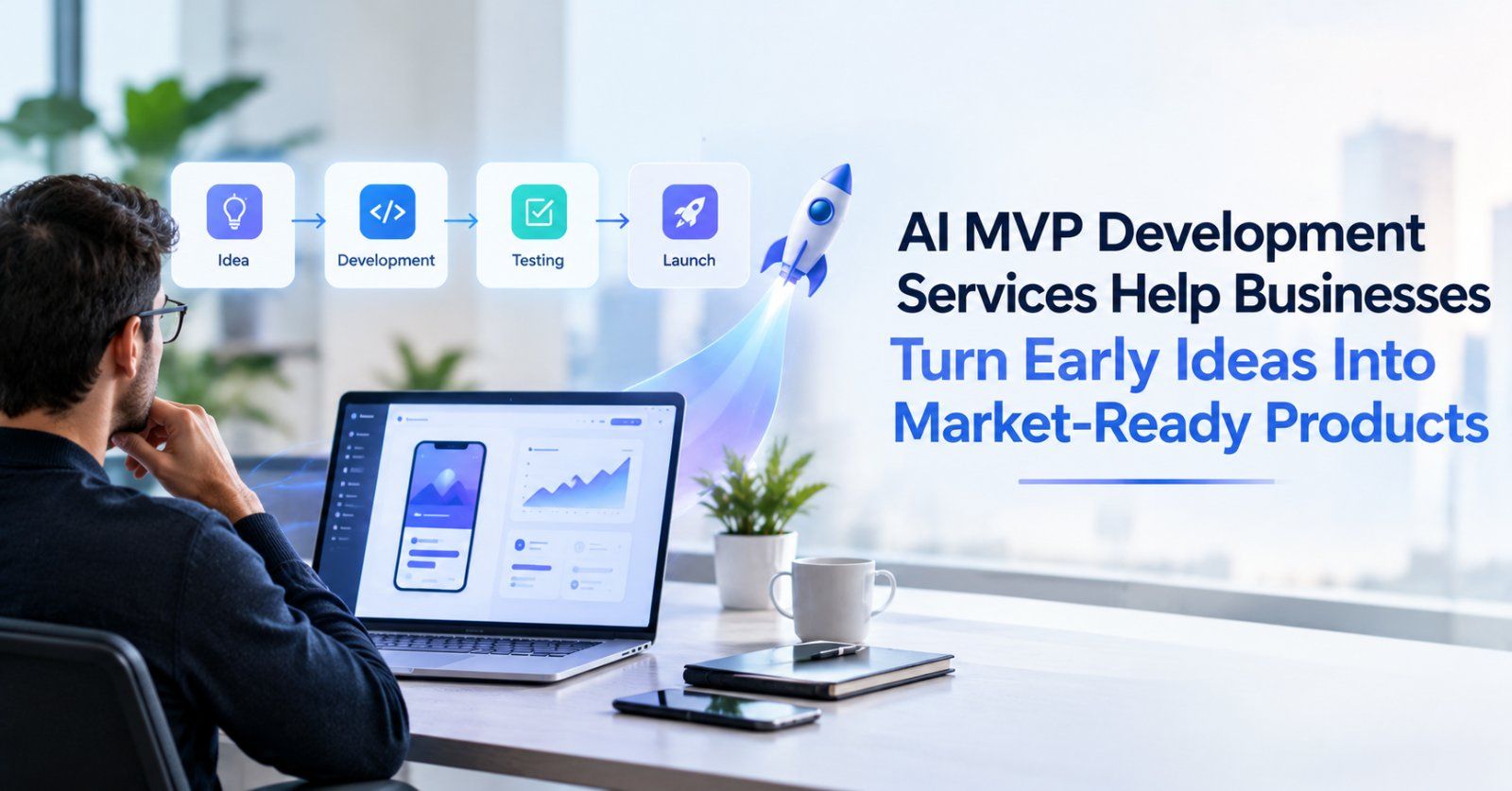
Many technology products begin with a simple question: can this idea solve a real problem? A business may have identified a gap in the market, planned a new feature or spotted an opportunity to improve an existing process. Turning that idea into something people can actually use, however, takes more than a convincing presentation or a working demonstration.This is where AI MVP development services can make a difference. They help businesses shape an early concept into a usable product with the essential features needed to test its value. Rather than spending heavily on a complete application from the outset, companies can start with a focused version, gather feedback and decide what deserves further investment.
Why Businesses Need to Test Ideas Before Building
An idea may sound useful internally but work differently when it reaches actual users. Customers may find the process confusing, prefer a different feature or have needs that the original plan did not consider. Discovering these gaps after a full launch can be expensive.
The first step should be to identify the problem the product is expected to solve. Teams need to understand who will use it, what those users currently struggle with and how the proposed solution could improve their experience. This gives development work a clear direction.
AI POC development services can help businesses test whether a proposed technical approach is practical. A proof of concept might examine whether a model can process certain documents, classify information or support a particular business task. The aim is to answer a specific technical question before committing to a larger build.
A successful test is useful evidence, but it does not prove that the finished product will succeed. Teams still need to consider cost, performance, data quality and the needs of the people who will use it.
Understanding the Role of a Proof of Concept
A proof of concept and a minimum viable product serve different purposes. A proof of concept checks whether an idea or technical method can work. An MVP is a usable early version designed to test the product with its intended audience.
AI POC development services are particularly useful when a project involves uncertainty around technical feasibility. For example, a company may want to know whether a system can extract information from large volumes of documents with acceptable accuracy. A limited test can reveal its strengths and weaknesses before the business commits to a wider implementation.
Good AI POC development should have a defined question, measurable results and a clear decision at the end. Teams should record what worked, what failed and what needs further investigation. Without this assessment, a proof of concept can become an isolated experiment that never informs the next stage.
Building the First Version Around Real Users
Once the idea has been validated, attention can shift towards building a product that people can try. AI MVP development focuses on the features that are essential to the main purpose of the application. Additional functions can be considered later, after the team has learned how users interact with the first version.
For instance, a business developing an internal document assistant may begin with document upload, information search and basic response generation. Advanced reporting or integrations with several other systems may not be necessary for the initial release.
AI MVP development services help teams define this first scope and avoid adding features simply because they are technically possible. The goal is to create something useful enough to test, not a reduced version of a much larger product that is difficult to maintain.
The quality of the first version matters. Even an early release should have a clear interface, sensible error handling and appropriate data protection. Users may accept a limited feature set, but they still need a product that behaves reliably.
Planning the Journey From Prototype to Production
A prototype is usually built to demonstrate an idea. It may use sample data, temporary integrations or manual steps that make the demonstration easier. Those shortcuts can be reasonable during experimentation, but they need to be reviewed before a product is released to real users.
The move from prototype to production requires attention to the underlying code, infrastructure, security and performance. Teams must check whether the system can handle real data, support expected usage and recover from errors. They also need to establish how updates and maintenance will be managed.
A structured plan for moving from prototype to production can prevent a promising project from getting stuck after its first demonstration. It gives developers and business stakeholders a shared understanding of what must be completed before launch.
AI POC development can provide useful findings at this stage, particularly when teams need to confirm the reliability of a technical component. Those findings should inform the next build rather than being treated as proof that every part of the product is ready.
What Changes Before a Product Goes Live?
The journey from prototype to production often reveals requirements that were not part of the original experiment. A live product may need user accounts, access permissions, secure data storage, monitoring and connections to existing business systems. These requirements should be addressed before the product is made widely available.
Businesses should also decide how they will measure performance. Depending on the product, useful indicators may include user adoption, task completion, response quality, processing time and operating costs. These measures help teams understand whether the product is delivering the result it was designed to achieve.
AI MVP development services can support this stage by helping teams improve the first version based on testing and user feedback. Instead of adding features without a clear reason, developers can prioritise changes that address actual problems.
Security, Data Quality and Ongoing Maintenance
Products that use artificial intelligence may process customer records, business documents or other sensitive information. Companies should decide what data the system can access, where it is stored and who is allowed to view it. Permissions, backup procedures and security testing should be part of the development plan.
Data quality also deserves attention. Incomplete, outdated or inconsistent information can affect the system's output. Teams need a process for checking results, reporting mistakes and updating the information used by the product.
Moving from prototype to production is not the end of development. Once users begin working with the product, new requirements and unexpected issues will emerge. Regular reviews help businesses decide which changes are necessary and which requests can wait.
Choosing the Right Development Approach
Before selecting a development partner, businesses should look for a team that understands both the technical work and the business problem. A clear development process should cover discovery, feasibility checks, product scope, design, testing and deployment.
Companies considering AI POC development services should ask how success will be measured and what decisions the findings will support. Those exploring AI MVP development services should understand what will be included in the first release, how feedback will be collected and what support will be available after launch.
The most useful approach is one that connects every stage to a clear outcome. It should help a business decide whether to continue, change direction or invest further, rather than encouraging development for its own sake.
Turning an Early Idea Into a Product People Can Use
The path from prototype to production is rarely a single step. It involves testing assumptions, making practical choices, learning from users and improving the product as new information becomes available. Businesses that allow time for these stages are better placed to avoid costly changes later.
AI MVP development services can give companies a structured way to build and test an early product without losing sight of the larger business goal. Combined with careful AI POC development, user feedback and proper technical planning, this approach can turn an initial concept into a product that is ready for real-world use.
Ment Tech Labs works with businesses on technology development projects, helping them plan and build solutions around their requirements. To learn more, visit https://www.ment.tech/.