Links are not yet activated.
Is this your press release? Add a link to submitpr.org on your website and verify it — activation is instant and free.
Or upgrade once for permanent activation (from $19.95, pay with crypto).
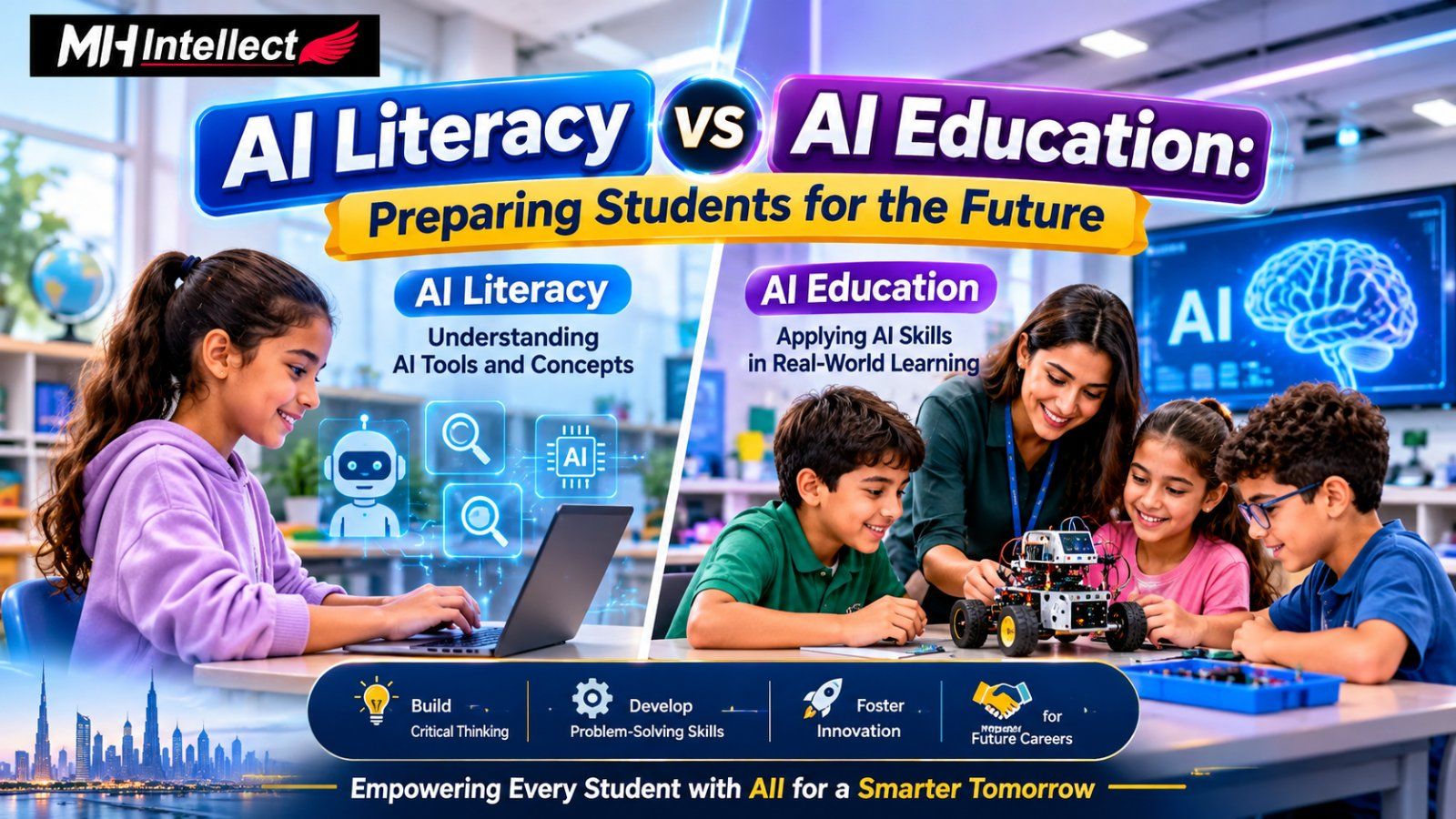
# AI Literacy vs AI Education: Preparing Students for the FutureArtificial Intelligence (AI) is transforming the way students learn, communicate, and interact with technology. As AI becomes increasingly integrated into everyday life, schools have an important responsibility to prepare learners with the knowledge and skills needed to use it effectively and responsibly. Developing [AI literacy](https://mhintellect.com/blogs/ai-literacy-vs-ai-education-difference-schools) and introducing structured [AI education](https://mhintellect.com/blogs/ai-literacy-vs-ai-education-difference-schools) are essential steps towards creating a future-ready generation of students.
AI literacy helps students understand how artificial intelligence works, evaluate AI-generated information, recognise potential limitations, and use digital tools responsibly. AI education takes this understanding further by introducing technical concepts such as machine learning, coding, robotics, data analysis, and automation. Together, these learning approaches help students become confident technology users, critical thinkers, and creative problem-solvers.
The growing importance of [AI education in UAE](https://mhintellect.com/blogs/ai-literacy-vs-ai-education-difference-schools) schools reflects the region's commitment to digital innovation and future-focused learning. Similarly, [AI education programs](https://mhintellect.com/blogs/ai-literacy-vs-ai-education-difference-schools) provide opportunities for students to explore artificial intelligence through age-appropriate lessons, interactive demonstrations, and practical projects. Younger learners can begin with visual coding and simple AI activities, while older students can explore Python programming, machine learning, chatbot development, and data analysis.
The expansion of [AI education in Dubai schools](https://mhintellect.com/blogs/ai-literacy-vs-ai-education-difference-schools) also highlights the importance of integrating emerging technologies into modern classrooms. Through coding challenges, robotics activities, and collaborative projects, students can develop computational thinking, creativity, teamwork, and problem-solving skills. Teachers play an important role in guiding learners to understand digital privacy, ethical AI use, information accuracy, and responsible technology practices.
Building [AI Literacy for Students](https://mhintellect.com/blogs/ai-literacy-graduate-success-uae-schools) is particularly important as young people increasingly encounter AI-powered applications in education and everyday life. Students need to understand that AI-generated responses may contain errors and should be evaluated carefully. Developing awareness of data privacy, bias, and responsible technology use helps learners make informed decisions.
Artificial intelligence also creates new opportunities for practical STEM learning. [How AI Is Transforming STEM Education](https://mhintellect.com/blogs/ai-in-stem-education-personalized-learning) explores how AI can support interactive learning, experimentation, and personalised educational experiences. Combining artificial intelligence with science, technology, engineering, and mathematics encourages students to explore real-world challenges and develop innovative solutions.
[MH Intellect](https://mhintellect.com) supports schools in introducing engaging STEM learning experiences through practical activities in coding, robotics, engineering, and emerging technologies. By combining AI literacy with structured AI education and hands-on learning, schools can help students develop essential technical knowledge, digital responsibility, and future-ready skills.
As artificial intelligence continues to shape the future, integrating AI awareness and practical education into school curricula will be increasingly important. Preparing students to understand, evaluate, and create with AI can inspire the next generation of innovators, responsible technology users, and future leaders.