Links are not yet activated.
Is this your press release? Add a link to submitpr.org on your website and verify it — activation is instant and free.
Or upgrade once for permanent activation (from $19.95, pay with crypto).
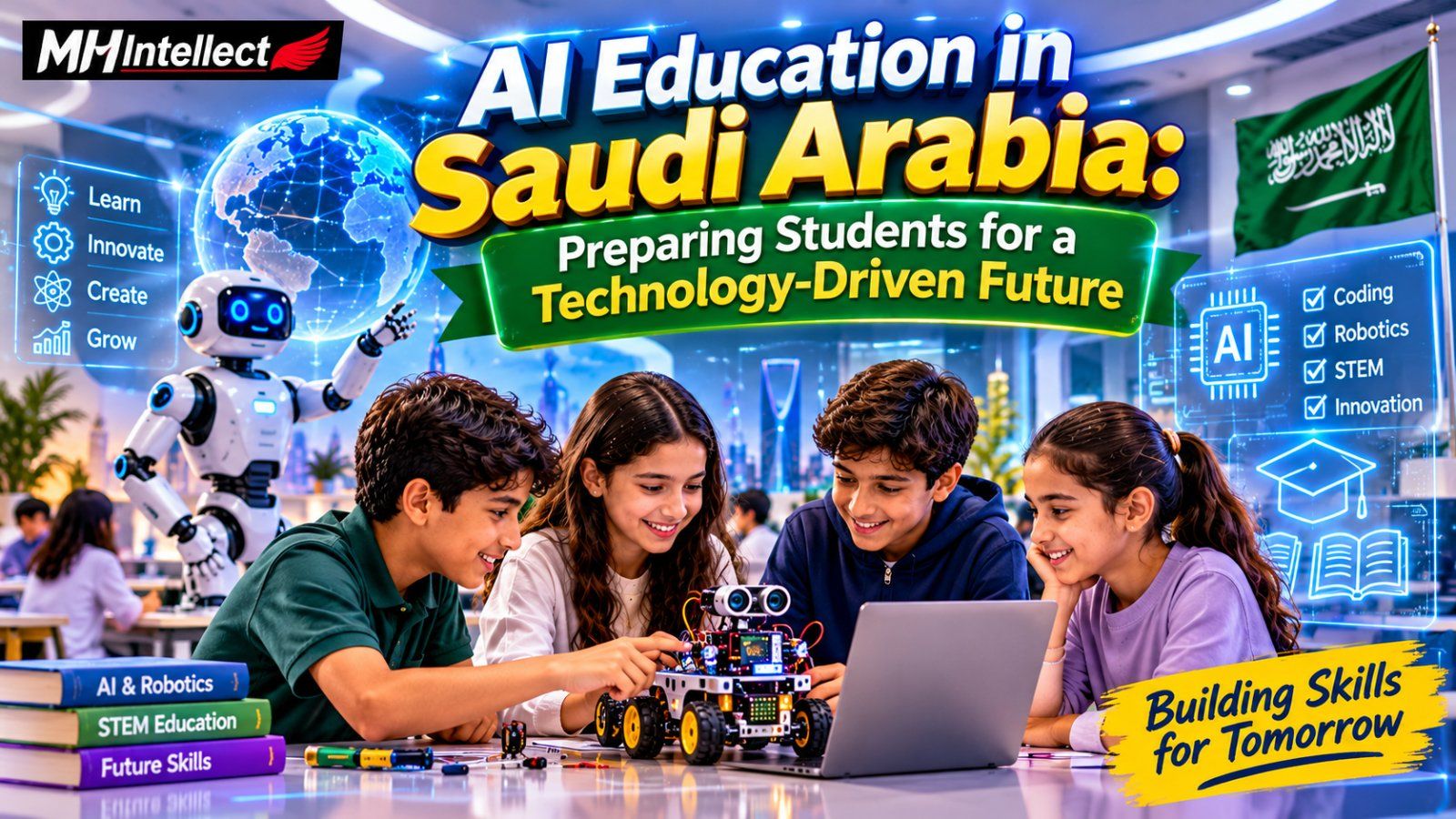
# AI Education in Saudi Arabia: Preparing Students for a Technology-Driven FutureArtificial Intelligence (AI) is transforming industries and creating new opportunities across education, healthcare, engineering, and technology. As digital innovation continues to shape the future, schools have an important responsibility to prepare students with the knowledge and skills needed to succeed. [AI education in Saudi Arabia](https://mhintellect.com/blogs/how-saudi-arabian-schools-are-teaching-ai) is becoming increasingly important as educational institutions explore coding, robotics, machine learning, and practical STEM activities to introduce students to emerging technologies.
Introducing [AI education for Saudi schools](https://mhintellect.com/blogs/how-saudi-arabian-schools-are-teaching-ai) can help learners understand how intelligent systems operate and how artificial intelligence is used to solve real-world challenges. Through structured lessons and interactive activities, students can develop digital awareness, computational thinking, creativity, and analytical skills. Early exposure to AI also helps learners become familiar with technologies that are increasingly relevant across different industries.
Providing opportunities to [learn artificial intelligence](https://mhintellect.com/blogs/how-saudi-arabian-schools-are-teaching-ai) allows students to explore how machines recognise patterns, process information, and generate results. Age-appropriate activities such as visual programming, interactive demonstrations, and educational robotics can introduce younger learners to AI concepts. Older students can progress to Python programming, machine learning, data analysis, and basic AI application development. These experiences encourage independent thinking and connect theoretical knowledge with practical challenges.
Effective [AI learning](https://mhintellect.com/blogs/how-saudi-arabian-schools-are-teaching-ai) combines theoretical understanding with hands-on experiences. Students can develop simple chatbots, experiment with image recognition, programme robots, and use sensors to collect and analyse information. Such projects make complex concepts easier to understand while strengthening creativity, collaboration, and problem-solving abilities. Responsible AI use should also be included in classroom learning, helping students understand data privacy, information accuracy, algorithmic bias, and ethical technology practices.
Integrating [AI in STEM education](https://mhintellect.com/blogs/how-saudi-arabian-schools-are-teaching-ai) creates opportunities for students to apply science, technology, engineering, and mathematics to real-world problems. Through robotics, coding, automation, and data-driven projects, learners can explore applications in smart agriculture, environmental monitoring, healthcare, and other industries. This interdisciplinary approach encourages experimentation and helps students develop innovative solutions.
[MH Intellect](https://mhintellect.com) supports schools in creating engaging STEM learning environments through practical educational activities involving coding, robotics, engineering, and artificial intelligence. As a [STEM Implementation Partner](https://mhintellect.com/stem-implementation-partner), MH Intellect helps schools introduce hands-on learning experiences that encourage curiosity, creativity, and technical understanding. Educators can also explore the [Student's Gallery](https://mhintellect.com/gallery) to discover examples of student projects and practical STEM learning.
As Saudi Arabia continues to embrace digital transformation and technological innovation, integrating AI into school education can help prepare students for emerging career opportunities. By combining structured AI lessons with practical STEM activities and responsible technology practices, schools can develop confident learners, critical thinkers, and future innovators.